utangin
utángin with stress marks
to borrow [it]
From root: utang
Conjugations
Past (Completed)
inutang
i-NU-tang
borrowed
Present (Incomplete)
inuutang
i-nu-U-tang
is being borrowed
Future (Contemplated)
uutangin
u-u-TA-ngin
will be borrowed
Usage Note
Utangin is the object-focus infinitive of utang, placing the item or amount being borrowed as the grammatical focus. Used for both formal loans and casual borrowing of everyday goods like rice or fare money, the object-focus framing highlights the specific thing owed — making it the natural form in contexts where repayment of a particular item is under discussion.
Examples
" Utangin mo na lang ang pamasahe. "
Natural Translation
Just borrow the fare.
Literal Translation
Borrow you just only the fare.
" Planong utangin ng kapitbahay ang natitirang bigas sa tindahan. "
Natural Translation
The neighbor plans to borrow the remaining rice from the store.
Literal Translation
Plan to-borrow by neighbor the remaining rice at store.
" Hindi na niya inutang ang bigas dahil natanggap na niya ang sahod kahapon ng hapon. "
Natural Translation
He no longer borrowed the rice because he had already received his salary yesterday afternoon.
Literal Translation
Not anymore he borrowed the rice because received already he the salary yesterday of afternoon.
Take Tagalog with you
The full course, a 12,500-word dictionary, and flashcards that make every word stick — free to start on iOS and Android.




Tagalog builds thousands of words from a few hundred roots.
How Tagalog words workWord family
utang has 1 related form built from the same root.
Related Words
Explore Tagalog by topic
Free guides on grammar, vocabulary, and culture to take you past single-word lookups.

Filipino Family Words and Honorifics: Ate, Kuya & Tita
Filipino family words like ate, kuya, tita, tito, lolo, and lola go far beyond family — learn how Filipinos use them with strangers, plus mano po etiquette.

Tagalog Slang Guide: 20 Words You'll Hear on TikTok
Tagalog slang explained: lodi, petmalu, werpa, astig, chika and more. Decode Filipino TikTok comments, group chats, and pop culture with this practical guide.
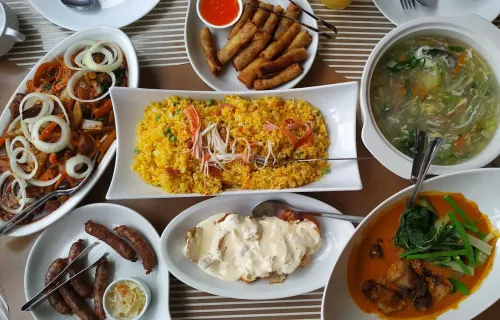
Filipino Food: 12 Essential Dishes (With Tagalog Names)
Filipino food, from adobo to halo-halo: learn the Tagalog names, pronunciations, and ingredients behind 12 dishes you'll want to try on your first trip.

Magkano: How to Ask "How Much" in Tagalog
Magkano means how much in Tagalog. Learn to ask a price, tell it apart from ilan and gaano, sound polite with po, and haggle at the palengke.