From root: uwi
Usage Note
Pauwi describes a person who is currently in transit to their residence. For example, pauwi na ako means I am already on my way home.
Examples
" Pauwi na ako. "
Natural Translation
I'm on my way home now.
Literal Translation
On-the-way-home already I.
" Ako ay pauwi na galing sa opisina. "
Natural Translation
I am already on my way home from the office.
Literal Translation
I am on-the-way-home already from at office.
" Pauwi na sana ako noong tumawag ang aking amo at sinabing kailangan ko pang bumalik sa opisina. "
Natural Translation
I was already on my way home when my boss called and said I still needed to come back to the office.
Literal Translation
On-the-way-home already supposedly I when called the my boss and said need I still return to office.
Take Tagalog with you
The full course, a 12,500-word dictionary, and flashcards that make every word stick — free to start on iOS and Android.




Tagalog builds thousands of words from a few hundred roots.
How Tagalog words workWord family
uwi has 7 related forms built from the same root.
Related Words
Explore Tagalog by topic
Free guides on grammar, vocabulary, and culture to take you past single-word lookups.

Tagalog vs Filipino: What's the Difference & Which to Learn
Tagalog and Filipino aren't the same language — but they overlap almost completely. Here's the real difference and which one you should actually learn.
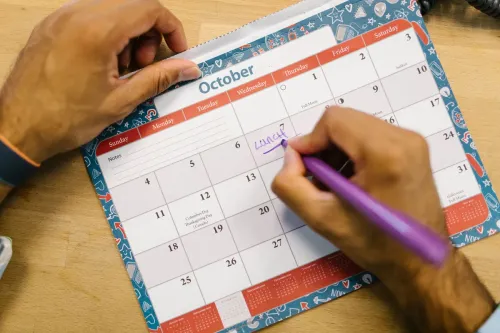
Days of the Week and Months in Tagalog
The days of the week and months in Tagalog are Spanish loanwords. Learn all 7 days and 12 months with pronunciation, plus how to say dates and 'every Monday.'

Tagalog Pronouns Explained: Complete Chart with Examples
Every Tagalog pronoun explained with clear charts: ang/ng/sa forms, tayo vs kami, ikaw vs ka, politeness markers, and the mistakes beginners make.

Mano Po and Filipino Etiquette: A Visitor's Guide
Mano po presses an elder's hand to your forehead as a blessing. Learn who to mano, how to lip-point, and the etiquette that wins over a Filipino family.