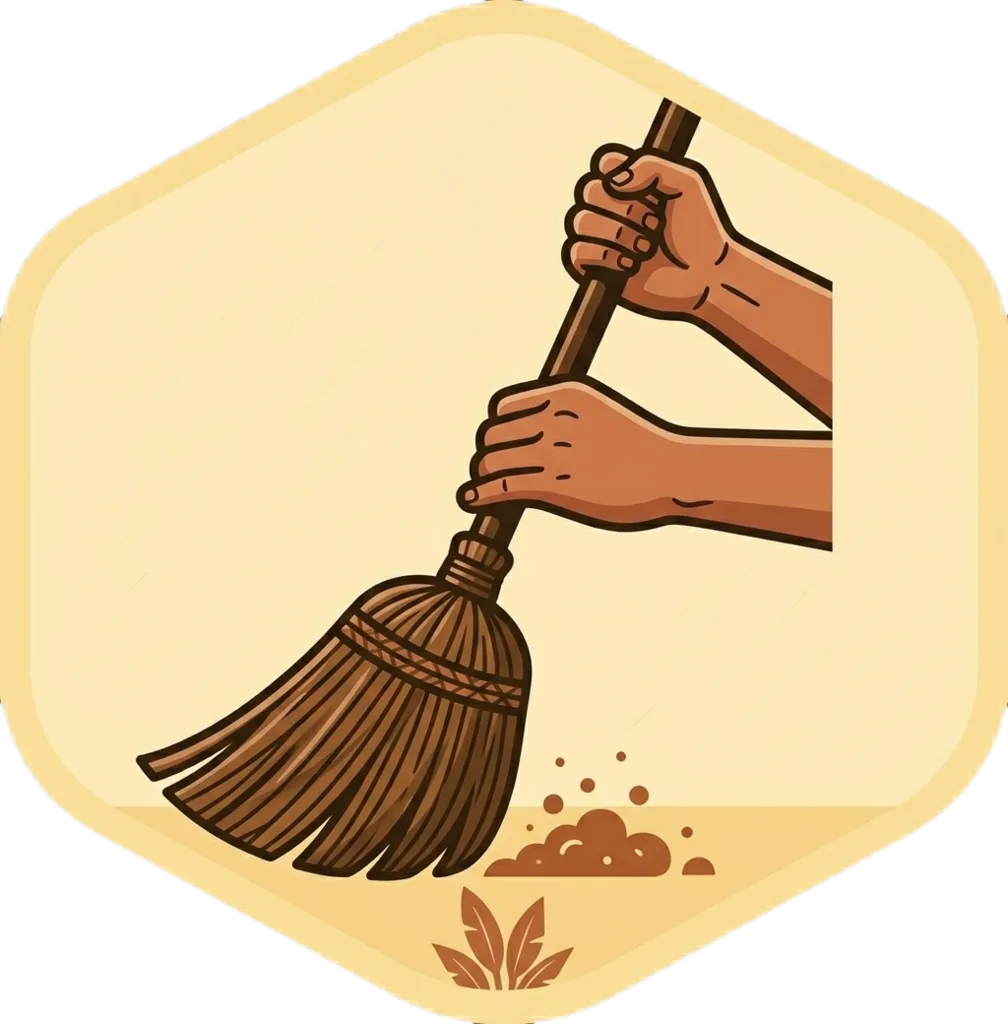
From root: walis
Conjugations
Past (Completed)
nagwalis
nag-wa-LIS
swept
Present (Incomplete)
nagwawalis
nag-wa-wa-LIS
sweeping
Future (Contemplated)
magwawalis
mag-wa-wa-LIS
will sweep
Usage Note
Magwalis is used when referring to the act of sweeping as a general activity or chore, typically involving the use of traditional Filipino brooms like the walis tambo or walis tingting. As an actor-focus verb, it emphasizes the person performing the action rather than the specific dirt or area being cleaned.
Examples
" Magwalis ka muna. "
Natural Translation
Sweep first.
Literal Translation
Sweep you first.
" Magwalis ka sa harap ng bahay. "
Natural Translation
Sweep the front of the house.
Literal Translation
Sweep you at front of house.
" Bago umalis sa bahay, nagwawalis muna si Lola sa silong para malinis ang sahig. "
Natural Translation
Before leaving the house, Grandma sweeps under the house first so the floor is clean.
Literal Translation
Before leave from house, sweeping first name-marker Grandma at underneath for clean the floor.
Take Tagalog with you
The full course, a 12,500-word dictionary, and flashcards that make every word stick — free to start on iOS and Android.




Tagalog builds thousands of words from a few hundred roots.
How Tagalog words workWord family
walis has 8 related forms built from the same root.
Related Words
Explore Tagalog by topic
Free guides on grammar, vocabulary, and culture to take you past single-word lookups.

Filipino Family Words and Honorifics: Ate, Kuya & Tita
Filipino family words like ate, kuya, tita, tito, lolo, and lola go far beyond family — learn how Filipinos use them with strangers, plus mano po etiquette.

Tagalog Pronouns Explained: Complete Chart with Examples
Every Tagalog pronoun explained with clear charts: ang/ng/sa forms, tayo vs kami, ikaw vs ka, politeness markers, and the mistakes beginners make.

Magkano: How to Ask "How Much" in Tagalog
Magkano means how much in Tagalog. Learn to ask a price, tell it apart from ilan and gaano, sound polite with po, and haggle at the palengke.
Spaced Repetition for Tagalog: How Flashcards Make Words Stick
Cramming Tagalog vocabulary fails. See how spaced repetition — the science behind smart flashcards — makes words stick for the long term.