
From root: yakap
Conjugations
Past (Completed)
niyakap
ni-YA-kap
hugged
Present (Incomplete)
niyayakap
ni-ya-YA-kap
hugging
Future (Contemplated)
yayakapin
ya-ya-ka-PIN
will hug
Usage Note
Yakapin is used when the focus of the sentence is the person or object being hugged, emphasizing the act of showing affection or providing comfort. It is also used figuratively to mean embracing a concept, opportunity, or change in one's life.
Examples
" Gusto kong yakapin ka. "
Natural Translation
I want to hug you.
Literal Translation
Want I hug you.
" Gusto kong yakapin si Nanay. "
Natural Translation
I want to hug Mom.
Literal Translation
Want I hug name-, Mom.
" Nang makita niya ang kanyang inang matagal nang nawalay, mahigpit niyang niyakap ito habang umiiyak sa tuwa. "
Natural Translation
When she saw her mother whom she had long been separated from, she hugged her tightly while crying for joy.
Literal Translation
When saw she the her mother long already separated, tightly she hugged this while crying in joy.
Take Tagalog with you
The full course, a 12,500-word dictionary, and flashcards that make every word stick — free to start on iOS and Android.




Tagalog builds thousands of words from a few hundred roots.
How Tagalog words workWord family
yakap has 7 related forms built from the same root.
Related Words
Explore Tagalog by topic
Free guides on grammar, vocabulary, and culture to take you past single-word lookups.
May vs Mayroon vs Meron: Have & There Is
May vs mayroon in Tagalog finally made simple: one rule decides which to use, plus how meron and wala fit the same have and there-is family.
Philippines Geography for Learners: Islands & Language
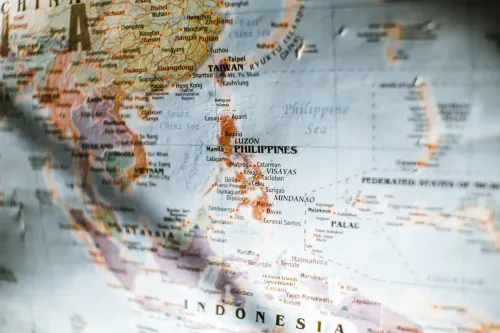
Philippines geography for Tagalog learners: 7,641 islands, three island groups, and the Southern Luzon heartland where the Tagalog language was born.

Ang, Ng, Sa: The 3 Tagalog Case Markers Explained
Ang, ng, sa are the three Tagalog case markers every noun takes. Learn what each does, the personal forms si/ni/kay, plurals with mga, and clear examples.

Spaced Repetition for Tagalog: How Flashcards Make Words Stick
Cramming Tagalog vocabulary fails. See how spaced repetition — the science behind smart flashcards — makes words stick for the long term.