magyanig
magyánig with stress marks
to shake; to cause a tremor
From root: yanig
Conjugations
Past (Completed)
nagyanig
nag-YA-nig
shook
Present (Incomplete)
nagyayanig
nag-ya-YA-nig
is shaking
Future (Contemplated)
magyayanig
mag-ya-YA-nig
will shake
Usage Note
Magyanig is the actor-focus form of yanig, describing the source that causes shaking or trembling. Most commonly associated with earthquakes — the Philippines sits on the Pacific Ring of Fire, making seismic vocabulary part of everyday life — it extends figuratively to anything that profoundly shakes a person's convictions, emotions, or social order.
Examples
" Nagyanig ang lupa kanina. "
Natural Translation
The ground shook earlier.
Literal Translation
Shook the ground earlier.
" May lakas ang kulog na magyanig ng mga marupok na bubong. "
Natural Translation
The thunder has the power to cause a tremor in fragile roofs.
Literal Translation
Has power the thunder to-cause-tremor of marker fragile roofs.
" Biglang nagyanig ang buong gusali nang gumuho ang malaking bato sa bundok, kaya nagsitakbuhan ang mga tao palabas. "
Natural Translation
The whole building suddenly shook when the large boulder collapsed on the mountain, so the people ran outside.
Literal Translation
Suddenly shook the whole building when collapsed the big rock on mountain, so ran the people outward.
Take Tagalog with you
The full course, a 12,500-word dictionary, and flashcards that make every word stick — free to start on iOS and Android.




Tagalog builds thousands of words from a few hundred roots.
How Tagalog words workWord family
yanig has 1 related form built from the same root.
Related Words
Explore Tagalog by topic
Free guides on grammar, vocabulary, and culture to take you past single-word lookups.

How Long Does It Take to Learn Tagalog?
Survival Tagalog takes ~3-4 weeks and comfortable conversation 6-12 months. FSI's 1,100 hours is the professional bar, not the talking-to-family bar.

Mano Po and Filipino Etiquette: A Visitor's Guide
Mano po presses an elder's hand to your forehead as a blessing. Learn who to mano, how to lip-point, and the etiquette that wins over a Filipino family.

Tagalog Affixes Explained: A Beginner's Guide to Word Building
Tagalog affixes turn one root word into dozens of meanings. Learn prefixes, infixes, suffixes, and circumfixes with clear examples for beginners.
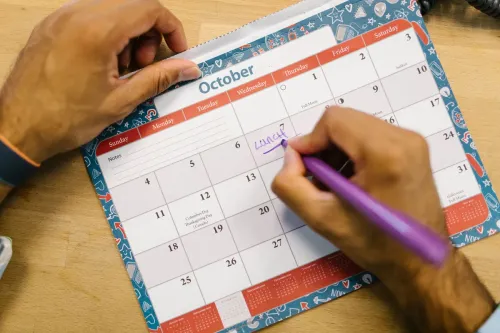
Days of the Week and Months in Tagalog
The days of the week and months in Tagalog are Spanish loanwords. Learn all 7 days and 12 months with pronunciation, plus how to say dates and 'every Monday.'