
From root: yelo
Conjugations
Past (Completed)
niyeluhin
ni-ye-lu-HIN
turned into ice
Present (Incomplete)
niyeyeluhin
ni-ye-ye-lu-HIN
turning into ice
Future (Contemplated)
yeyeluhin
ye-ye-lu-HIN
will turn into ice
Usage Note
Yeluhin is used when instructing someone to freeze a liquid or to chill an item until it turns into ice. It is most commonly heard in domestic contexts, such as when preparing ice cubes or freezing treats like 'ice candy'.
Examples
" Yeluhin mo ang tubig. "
Natural Translation
Freeze the water.
Literal Translation
Turn-into-ice you the water.
" Gusto kong yeluhin ang juice. "
Natural Translation
I want the juice to turn into ice.
Literal Translation
Want I to-turn-into-ice the juice.
" Kung gusto mong gumawa ng ice candy, yeluhin mo ang juice nang buong gabi sa malamig na freezer. "
Natural Translation
If you want to make ice candy, freeze the juice overnight in the cold freezer.
Literal Translation
If want you to-make of ice-candy, turn-into-ice you the juice for whole night in cold freezer.
Take Tagalog with you
The full course, a 12,500-word dictionary, and flashcards that make every word stick — free to start on iOS and Android.




Tagalog builds thousands of words from a few hundred roots.
How Tagalog words workWord family
yelo has 5 related forms built from the same root.
Related Words
Explore Tagalog by topic
Free guides on grammar, vocabulary, and culture to take you past single-word lookups.

Tagalog Time Expressions: Past, Present & Future Guide
Tagalog has no tenses — it uses aspect. Learn time words, days of the week, clock time, and the aspect system, with vocabulary tables and cultural notes.

Tagalog Verb Conjugation: Aspects Made Simple
Tagalog verb conjugation uses aspects, not tenses. Learn the three aspects with -um- and mag- verbs, one reduplication rule, and clear example tables.
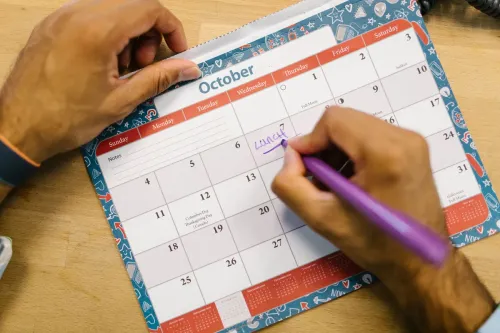
Days of the Week and Months in Tagalog
The days of the week and months in Tagalog are Spanish loanwords. Learn all 7 days and 12 months with pronunciation, plus how to say dates and 'every Monday.'

Tagalog Greetings: How to Say Hello, Goodbye & Po/Opo
Master Tagalog greetings with pronunciation: kumusta, magandang umaga, po and opo polite forms, time-of-day phrases, and the mano po tradition.