From root: yuko
Usage Note
Pagyuko refers to the action of bending the head or body, which is a traditional sign of respect or submission in Filipino culture.
Examples
" Tanda ng galang ang pagyuko. "
Natural Translation
Bowing is a sign of respect.
Literal Translation
Sign of respect the bowing.
" Ang pagyuko ay tanda ng paggalang. "
Natural Translation
Bowing is a sign of respect.
Literal Translation
The act-of-bowing is sign of respect.
" Sa kulturang Pilipino, ang pagyuko bago pumasok sa bahay ng matatanda ay nagpapakita ng tunay na paggalang. "
Natural Translation
In Filipino culture, bowing before entering the home of elders shows genuine respect.
Literal Translation
In culture Filipino, the bowing before entering at house of elders shows true respect.
Take Tagalog with you
The full course, a 12,500-word dictionary, and flashcards that make every word stick — free to start on iOS and Android.




Tagalog builds thousands of words from a few hundred roots.
How Tagalog words workWord family
yuko has 5 related forms built from the same root.
Related Words
Explore Tagalog by topic
Free guides on grammar, vocabulary, and culture to take you past single-word lookups.
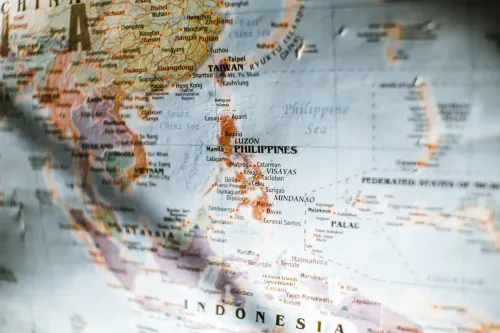
Philippines Geography for Learners: Islands & Language
Philippines geography for Tagalog learners: 7,641 islands, three island groups, and the Southern Luzon heartland where the Tagalog language was born.

Magkano: How to Ask "How Much" in Tagalog
Magkano means how much in Tagalog. Learn to ask a price, tell it apart from ilan and gaano, sound polite with po, and haggle at the palengke.
May vs Mayroon vs Meron: Have & There Is
May vs mayroon in Tagalog finally made simple: one rule decides which to use, plus how meron and wala fit the same have and there-is family.

Tagalog vs Filipino: What's the Difference & Which to Learn
Tagalog and Filipino aren't the same language — but they overlap almost completely. Here's the real difference and which one you should actually learn.