Usage Note
Ay! is a versatile interjection expressing surprise, sudden realization, mild pain, or dismay, and tone determines the meaning — a sharp cry signals physical pain while a drawn-out form signals playful shock or mild disapproval. It is extremely common in everyday Filipino speech.
Examples
" Ay! Masakit iyon! "
Natural Translation
Ouch! That hurts!
Literal Translation
Ay! Painful that!
" Ay! Nakalimutan ko ang aking bag sa bahay. "
Natural Translation
Oh! I forgot my bag at home.
Literal Translation
Ay! Forgot I the my bag in-the house.
" Ay! Muntik ko nang makalimutan na may pulong pala tayo mamayang hapon. "
Natural Translation
Oh! I almost forgot that we actually have a meeting this afternoon.
Literal Translation
Ay! Almost I already forget that have meeting surprisingly we later afternoon.
Take Tagalog with you
The full course, a 12,500-word dictionary, and flashcards that make every word stick — free to start on iOS and Android.




Tagalog builds thousands of words from a few hundred roots.
How Tagalog words workRelated Words
Explore Tagalog by topic
Free guides on grammar, vocabulary, and culture to take you past single-word lookups.

Filipino Food: 12 Essential Dishes (With Tagalog Names)
Filipino food, from adobo to halo-halo: learn the Tagalog names, pronunciations, and ingredients behind 12 dishes you'll want to try on your first trip.

How Long Does It Take to Learn Tagalog?
Survival Tagalog takes ~3-4 weeks and comfortable conversation 6-12 months. FSI's 1,100 hours is the professional bar, not the talking-to-family bar.

Tagalog Question Words: Ano, Sino, Saan & More
Tagalog question words like ano, sino, and saan need the right frame to work. Learn the ang-vs-pronoun rule, confusable pairs, and the ba particle with audio.
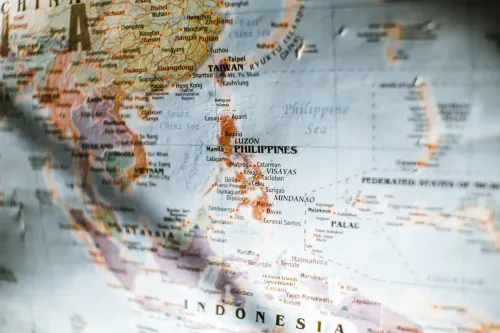
Philippines Geography for Learners: Islands & Language
Philippines geography for Tagalog learners: 7,641 islands, three island groups, and the Southern Luzon heartland where the Tagalog language was born.