Subanon
Subánon with stress marks
ethnolinguistic group in Zamboanga
Usage Note
Subanon (also spelled Subanen) are an indigenous people of the Zamboanga Peninsula in Mindanao whose name means 'people of the river'. They have a rich tradition of oral literature, craftsmanship, and community governance, and are an important voice in Philippine multicultural discourse.
Examples
" Subanon ang lola niya. "
Natural Translation
His/her grandmother is Subanon.
Literal Translation
Subanon the grandmother his/her.
" Kilala ko ang isang Subanon. "
Natural Translation
I know a Subanon.
Literal Translation
Know I a Subanon.
" Mayaman ang mga Subanon sa Zamboanga sa kanilang mga awiting-bayan na ipinapasa sa bawat henerasyon. "
Natural Translation
The Subanon of Zamboanga are rich in their folk songs that are passed down to each generation.
Literal Translation
Rich the Subanon in Zamboanga in their folk-songs that passed-down to each generation.
Take Tagalog with you
The full course, a 12,500-word dictionary, and flashcards that make every word stick — free to start on iOS and Android.




Tagalog builds thousands of words from a few hundred roots.
How Tagalog words workRelated Words
- AWOL absence without leave
- Amboy short for American boy
- Ati ethnolinguistic group in Panay
- Balbalan ethnolinguistic group (Kalinga)
- Hiligaynon ethnolinguistic group/language
- Ilokana female native of the Ilocos region; Ilokana woman
- Ilokano Ethnolinguistic group in Ilocos
- Ilonggo Language/People of Western Visayas
Explore Tagalog by topic
Free guides on grammar, vocabulary, and culture to take you past single-word lookups.
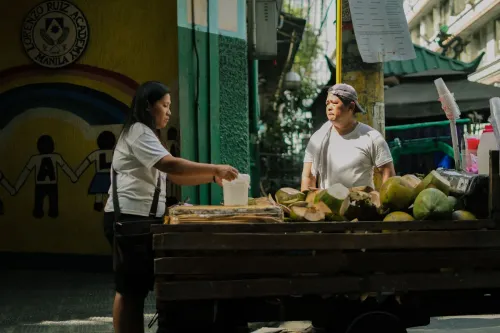
Magkano: How to Ask "How Much" in Tagalog
Magkano means how much in Tagalog. Learn to ask a price, tell it apart from ilan and gaano, sound polite with po, and haggle at the palengke.

Tagalog Verb Focus System Explained (It's Not Active vs. Passive)
The Tagalog verb focus system isn't active vs. passive. Learn actor focus, object focus, and more with clear examples that finally make it click.

Filipino Family Words and Honorifics: Ate, Kuya & Tita
Filipino family words like ate, kuya, tita, tito, lolo, and lola go far beyond family — learn how Filipinos use them with strangers, plus mano po etiquette.

How to Say Sorry in Tagalog: Patawad vs Pasensya
How to say sorry in Tagalog: patawad, pasensya na, and paumanhin compared on a simple severity-and-formality ladder so you pick the right word every time.