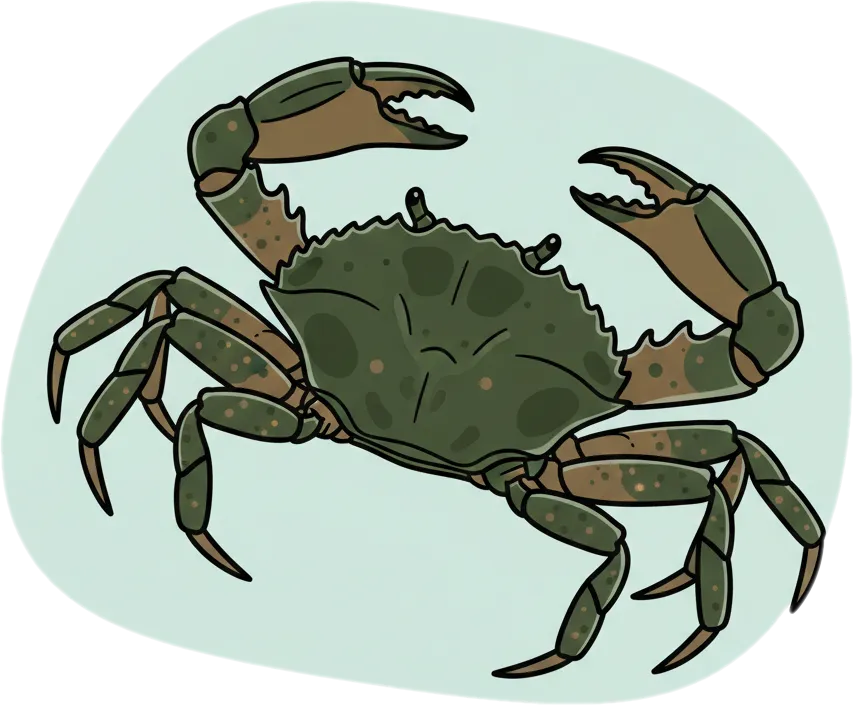
From root: alimango
Conjugations
Past (Completed)
nag-alimango
nag-a-li-MA-ngo
ate mud crab
Present (Incomplete)
nag-a-alimango
nag-a-a-li-MA-ngo
eating mud crab
Future (Contemplated)
mag-a-alimango
mag-a-a-li-MA-ngo
will eat mud crab
Usage Note
Mag-alimango is used to specify the act of eating mud crabs as a main activity or meal, often in the context of a feast or a seafood-centric gathering. While descriptive, speakers more frequently use the general phrase 'kumain ng alimango' in everyday conversation.
Examples
" Mag-alimango tayo sa tabing-dagat. "
Natural Translation
Let's eat mud crabs by the beach.
Literal Translation
Eat-mud-crab we at beach.
" Masarap mag-alimango sa dagat. "
Natural Translation
It is delicious to eat mud crabs by the sea.
Literal Translation
Delicious to-eat-mud-crab in sea.
" Kapag tag-ani sa amin, nag-aalimango ang buong pamilya hanggang sa mapuno ng balat ng alimango ang mesa. "
Natural Translation
When it is harvest season in our place, the whole family feasts on mud crabs until the table is covered with crab shells.
Literal Translation
When harvest-season at us, eating-mud-crab the whole family until covered with shell of mud-crab the table.
Take Tagalog with you
The full course, a 12,500-word dictionary, and flashcards that make every word stick — free to start on iOS and Android.




Tagalog builds thousands of words from a few hundred roots.
How Tagalog words workWord family
alimango has 2 related forms built from the same root.
Related Words
Explore Tagalog by topic
Free guides on grammar, vocabulary, and culture to take you past single-word lookups.

Mano Po and Filipino Etiquette: A Visitor's Guide
Mano po presses an elder's hand to your forehead as a blessing. Learn who to mano, how to lip-point, and the etiquette that wins over a Filipino family.

Filipino Family Words and Honorifics: Ate, Kuya & Tita
Filipino family words like ate, kuya, tita, tito, lolo, and lola go far beyond family — learn how Filipinos use them with strangers, plus mano po etiquette.

Magkano: How to Ask "How Much" in Tagalog
Magkano means how much in Tagalog. Learn to ask a price, tell it apart from ilan and gaano, sound polite with po, and haggle at the palengke.

Tagalog Word Order: Sentence Structure Made Simple
Why Tagalog puts the verb first, and how ang, ng, and sa markers work. A clear guide to VSO word order, forming questions, and negation.