alimango
alimángo with stress marks
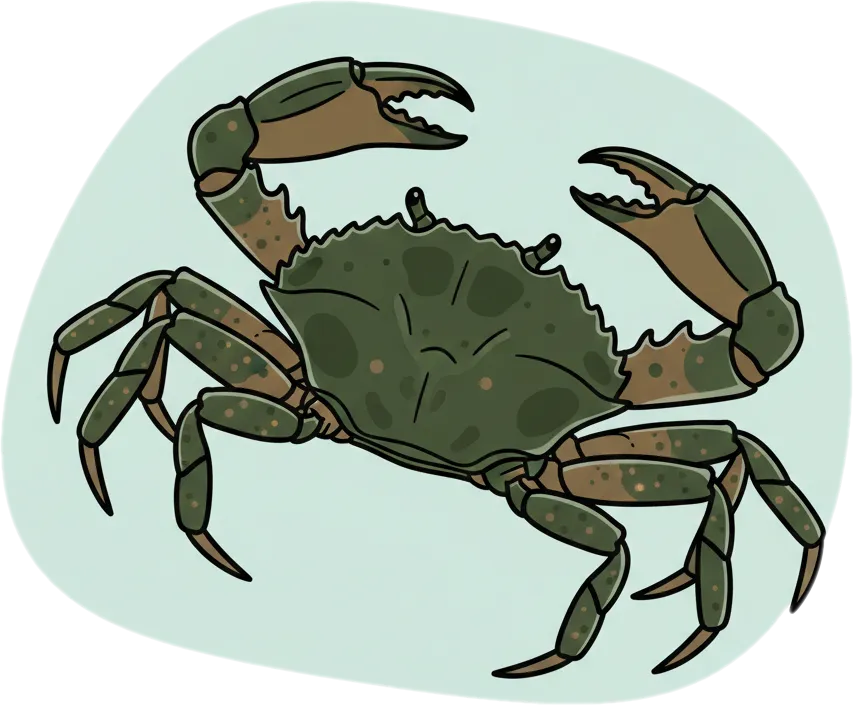
mud crab
Usage Note
Alimango refers specifically to large mud or mangrove crabs, which are prized as a seafood delicacy and distinguished from the smaller, spotted saltwater crabs called alimasag. This term is essential to know when navigating Filipino wet markets or seafood restaurants.
Examples
" Masarap ang alimango. "
Natural Translation
Mud crab is delicious.
Literal Translation
Delicious the mud-crab.
" Ang alimango ay sariwa. "
Natural Translation
The mud crab is fresh.
Literal Translation
The mud crab is fresh.
" Mas mahal ang alimango kaysa sa alimasag, ngunit mas marami itong laman na inihahain tuwing okasyon. "
Natural Translation
Mud crab is more expensive than spotted crab, but it has more meat and is served on special occasions.
Literal Translation
More expensive the mud-crab than spotted-crab, but more plenty its meat that is-served every occasion.
Take Tagalog with you
The full course, a 12,500-word dictionary, and flashcards that make every word stick — free to start on iOS and Android.




Tagalog builds thousands of words from a few hundred roots.
How Tagalog words workActor Focus Verbs
Related Words
Explore Tagalog by topic
Free guides on grammar, vocabulary, and culture to take you past single-word lookups.

Tagalog Time Expressions: Past, Present & Future Guide
Tagalog has no tenses — it uses aspect. Learn time words, days of the week, clock time, and the aspect system, with vocabulary tables and cultural notes.

Days of the Week and Months in Tagalog
The days of the week and months in Tagalog are Spanish loanwords. Learn all 7 days and 12 months with pronunciation, plus how to say dates and 'every Monday.'

Ang, Ng, Sa: The 3 Tagalog Case Markers Explained
Ang, ng, sa are the three Tagalog case markers every noun takes. Learn what each does, the personal forms si/ni/kay, plurals with mga, and clear examples.

Tagalog Verb Conjugation: Aspects Made Simple
Tagalog verb conjugation uses aspects, not tenses. Learn the three aspects with -um- and mag- verbs, one reduplication rule, and clear example tables.