anila
aníla with stress marks
they say or said
From root: ani
Usage Note
Anila is a reportative adverb combining 'ani' (said/says) + 'la' (they), used to attribute a statement to a third party. It functions similarly to 'according to them' or 'they say.' It appears in both written narrative and oral storytelling as a way to relay hearsay or quotation without full attribution.
Examples
" Darating na sila, anila. "
Natural Translation
They are coming, they said.
Literal Translation
Coming-now they, they-said.
" Tama ang balita, anila. "
Natural Translation
The news is correct, they said.
Literal Translation
Correct the news, they-said.
" Magaganda raw ang ani ngayong taon, anila, dahil maganda ang panahon sa buong tag-ulan. "
Natural Translation
The harvest will be good this year, they say, because the weather was good throughout the rainy season.
Literal Translation
Good reportedly the harvest this year, they-said, because good the weather in whole rainy-season.
Take Tagalog with you
The full course, a 12,500-word dictionary, and flashcards that make every word stick — free to start on iOS and Android.




Tagalog builds thousands of words from a few hundred roots.
How Tagalog words workWord family
ani has 9 related forms built from the same root.
Related Words
Explore Tagalog by topic
Free guides on grammar, vocabulary, and culture to take you past single-word lookups.
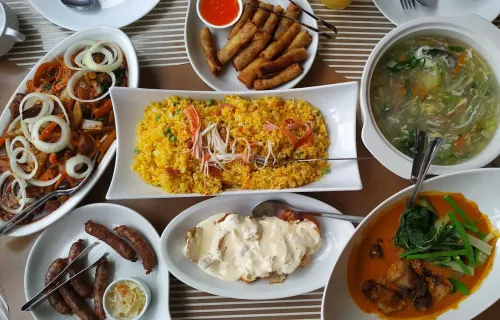
Filipino Food: 12 Essential Dishes (With Tagalog Names)
Filipino food, from adobo to halo-halo: learn the Tagalog names, pronunciations, and ingredients behind 12 dishes you'll want to try on your first trip.

Tagalog Verb Conjugation: Aspects Made Simple
Tagalog verb conjugation uses aspects, not tenses. Learn the three aspects with -um- and mag- verbs, one reduplication rule, and clear example tables.

Filipino Family Words and Honorifics: Ate, Kuya & Tita
Filipino family words like ate, kuya, tita, tito, lolo, and lola go far beyond family — learn how Filipinos use them with strangers, plus mano po etiquette.

Tagalog Greetings: How to Say Hello, Goodbye & Po/Opo
Master Tagalog greetings with pronunciation: kumusta, magandang umaga, po and opo polite forms, time-of-day phrases, and the mano po tradition.