Also means
Ápo with stress on the first syllable can refer to an honorific term for an elder, ancestor, or deity.
Usage Note
Apo is the standard Tagalog word for grandchild and is also used as a term of endearment by grandparents. The word captures the importance of intergenerational family bonds in Filipino culture, where grandparents often live with and help raise their grandchildren.
Examples
" Mahal ko ang aking apo. "
Natural Translation
I love my grandchild.
Literal Translation
Love I the my grandchild.
" Si Lola ay masayang naglaro kasama ang kanyang apo. "
Natural Translation
Grandmother happily played with his/her grandchild.
Literal Translation
The grandmother was happily played with the his/her grandchild.
" Tuwang-tuwa ang lola tuwing dumadalaw ang kanyang mga apo dahil ramdam niyang hindi sila nakakalimot sa kanya. "
Natural Translation
The grandmother is overjoyed whenever her grandchildren visit because she feels they haven't forgotten her.
Literal Translation
Very-happy the grandmother whenever visit the her [pl] grandchildren because feel she-that not they forget to her.
Take Tagalog with you
The full course, a 12,500-word dictionary, and flashcards that make every word stick — free to start on iOS and Android.




Tagalog builds thousands of words from a few hundred roots.
How Tagalog words workRelated Words
Explore Tagalog by topic
Free guides on grammar, vocabulary, and culture to take you past single-word lookups.

Magkano: How to Ask "How Much" in Tagalog
Magkano means how much in Tagalog. Learn to ask a price, tell it apart from ilan and gaano, sound polite with po, and haggle at the palengke.

Tagalog Verb Focus System Explained (It's Not Active vs. Passive)
The Tagalog verb focus system isn't active vs. passive. Learn actor focus, object focus, and more with clear examples that finally make it click.
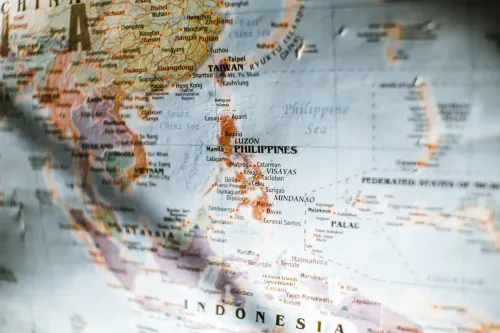
Philippines Geography for Learners: Islands & Language
Philippines geography for Tagalog learners: 7,641 islands, three island groups, and the Southern Luzon heartland where the Tagalog language was born.

Tagalog Greetings: How to Say Hello, Goodbye & Po/Opo
Master Tagalog greetings with pronunciation: kumusta, magandang umaga, po and opo polite forms, time-of-day phrases, and the mano po tradition.