Also means
As a noun with stress on the first syllable (áyos), it means arrangement or condition of something.
Usage Note
Ayós, stressed on the second syllable, is the adjective form meaning neat, in order, fixed, or acceptable. It is used freely in casual and formal contexts — ayos na! is a celebratory expression meaning done or all good.
Examples
" Ayos na ang kotse. "
Natural Translation
The car is fixed now.
Literal Translation
Fixed already the car.
" Ayos na ang lahat — pwede na tayong umalis. "
Natural Translation
Everything is in order — we can leave now.
Literal Translation
Ready already the all — can already we leave.
" Kahit gusot pa kanina ang lahat, ayos na ngayon dahil tinulungan kami ng aming mga kaibigan. "
Natural Translation
Even though everything was a mess earlier, it is all in order now because our friends helped us.
Literal Translation
Even messy still earlier the all, in-order already now because helped us by our friends.
Take Tagalog with you
The full course, a 12,500-word dictionary, and flashcards that make every word stick — free to start on iOS and Android.




Tagalog builds thousands of words from a few hundred roots.
How Tagalog words workRelated Words
Explore Tagalog by topic
Free guides on grammar, vocabulary, and culture to take you past single-word lookups.

Tagalog Time Expressions: Past, Present & Future Guide
Tagalog has no tenses — it uses aspect. Learn time words, days of the week, clock time, and the aspect system, with vocabulary tables and cultural notes.

Na vs -ng in Tagalog: The Linker Rule Made Simple
When do you use na vs -ng in Tagalog? One simple rule, with clear examples, memory tips, and common mistakes explained for English-speaking beginners.

Philippines Geography for Learners: Islands & Language
Philippines geography for Tagalog learners: 7,641 islands, three island groups, and the Southern Luzon heartland where the Tagalog language was born.
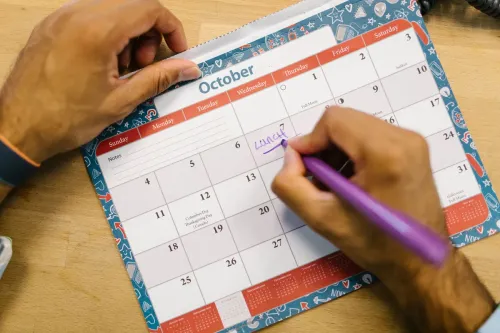
Days of the Week and Months in Tagalog
The days of the week and months in Tagalog are Spanish loanwords. Learn all 7 days and 12 months with pronunciation, plus how to say dates and 'every Monday.'