
From root: baba
Conjugations
Past (Completed)
ibinaba
i-bi-na-BA
lowered something
Present (Incomplete)
ibinababa
i-bi-na-ba-BA
lowering something
Future (Contemplated)
ibababa
i-ba-ba-BA
will lower something
Usage Note
Ibaba is used when moving an object to a lower position or asking a driver to drop off a passenger at a specific destination. It is an object-focused verb that is essential for giving directions or managing physical items.
Examples
" Ibaba mo ako rito. "
Natural Translation
Drop me off here.
Literal Translation
Lower you me here.
" Kailangan mong ibaba ang bag mo. "
Natural Translation
You need to lower your bag.
Literal Translation
Need you lower the bag your.
" Pakiusap, ibaba mo muna ang mga kahon sa unang palapag bago tayo umakyat sa itaas. "
Natural Translation
Please bring the boxes down to the first floor first before we go up.
Literal Translation
Please, lower you first the boxes at first floor before we go-up to top.
Take Tagalog with you
The full course, a 12,500-word dictionary, and flashcards that make every word stick — free to start on iOS and Android.




Tagalog builds thousands of words from a few hundred roots.
How Tagalog words workWord family
baba has 7 related forms built from the same root.
Related Words
Explore Tagalog by topic
Free guides on grammar, vocabulary, and culture to take you past single-word lookups.

Tagalog Verb Focus System Explained (It's Not Active vs. Passive)
The Tagalog verb focus system isn't active vs. passive. Learn actor focus, object focus, and more with clear examples that finally make it click.
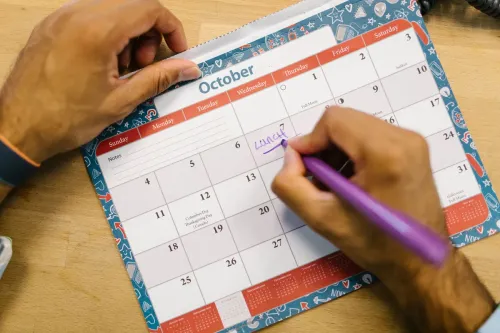
Days of the Week and Months in Tagalog
The days of the week and months in Tagalog are Spanish loanwords. Learn all 7 days and 12 months with pronunciation, plus how to say dates and 'every Monday.'

Ng vs Nang in Tagalog: The Spelling Rule
Ng vs nang sound identical but spell differently. Use ng to mark nouns (of, the object), and nang for how, when, repetition, and counting time.

How Long Does It Take to Learn Tagalog?
Survival Tagalog takes ~3-4 weeks and comfortable conversation 6-12 months. FSI's 1,100 hours is the professional bar, not the talking-to-family bar.