bading
báding with stress marks
gay male
Usage Note
Bading is a colloquial Tagalog term for a gay male that was historically pejorative but has been partially reclaimed by the LGBTQ+ community. Context and tone matter greatly — it can be warm and familiar or dismissive depending on usage.
Examples
" Bading ang kuya ko. "
Natural Translation
My older brother is gay.
Literal Translation
Gay-male the older-brother my.
" Mabait ang aking kaibigang bading. "
Natural Translation
My gay friend is kind.
Literal Translation
Kind the my friend-that gay-male.
" Bukas-palad na tinanggap ng pamilya na bading ang kanilang anak, at ipinagmalaki pa nila ito. "
Natural Translation
The family openheartedly accepted that their child is gay, and they were even proud of it.
Literal Translation
Open-handed accepted by-the family that gay-male the their child, and were-proud-of even they this.
Take Tagalog with you
The full course, a 12,500-word dictionary, and flashcards that make every word stick — free to start on iOS and Android.




Tagalog builds thousands of words from a few hundred roots.
How Tagalog words workRelated Words
- AWOL absence without leave
- Amboy short for American boy
- Ati ethnolinguistic group in Panay
- Balbalan ethnolinguistic group (Kalinga)
- Hiligaynon ethnolinguistic group/language
- Ilokana female native of the Ilocos region; Ilokana woman
- Ilokano Ethnolinguistic group in Ilocos
- Ilonggo Language/People of Western Visayas
Explore Tagalog by topic
Free guides on grammar, vocabulary, and culture to take you past single-word lookups.

How to Say "I Love You" in Tagalog: Phrases & Meaning
Learn how to say I love you in Tagalog. Mahal kita, Iniibig kita, and Filipino terms of endearment for partners, family, and friends — with cultural notes.
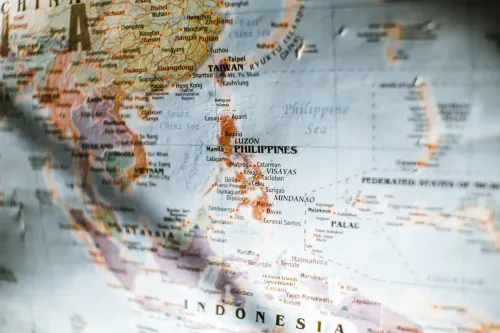
Philippines Geography for Learners: Islands & Language
Philippines geography for Tagalog learners: 7,641 islands, three island groups, and the Southern Luzon heartland where the Tagalog language was born.
Days of the Week and Months in Tagalog
The days of the week and months in Tagalog are Spanish loanwords. Learn all 7 days and 12 months with pronunciation, plus how to say dates and 'every Monday.'

Tagalog Numbers 1-100: Counting, Time & Money Explained
Learn Tagalog numbers 1-100 and beyond. Master both native and Spanish-derived counting systems, plus telling time, reading prices, and ordinals.