kabayanan
political/economic town center
From root: bayan
Usage Note
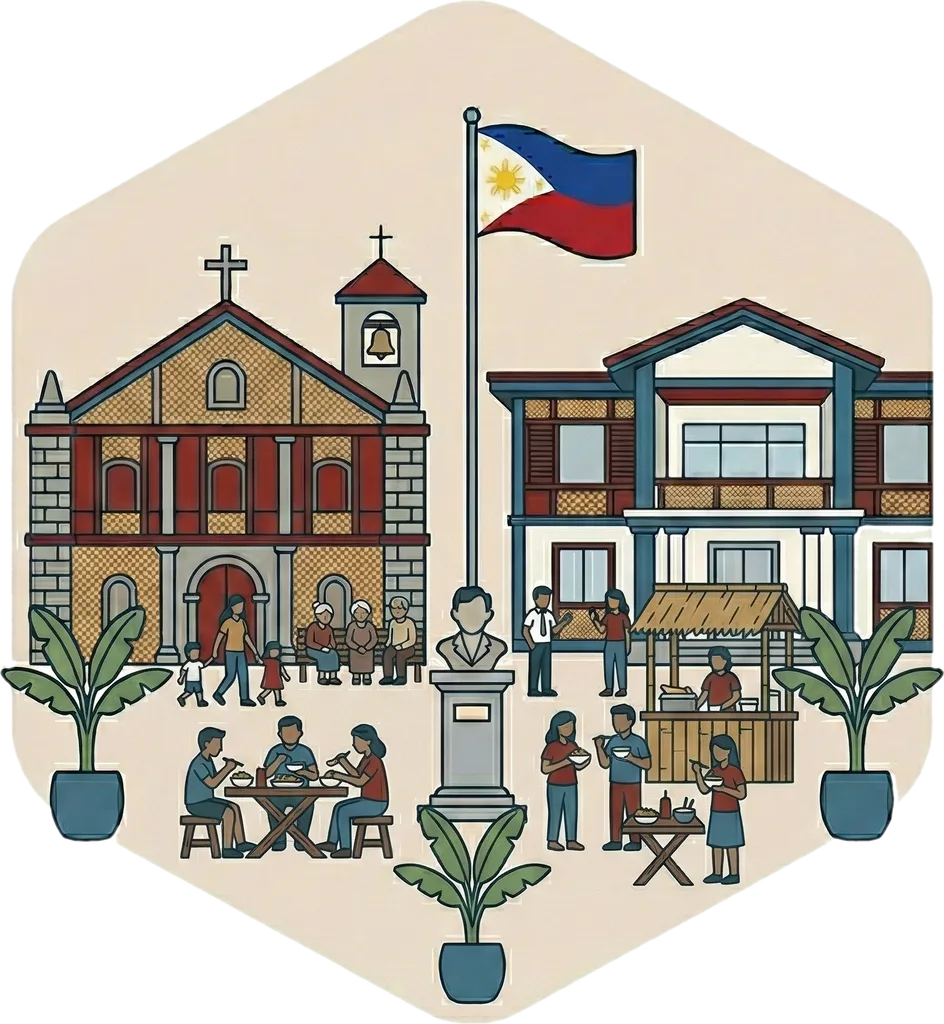
Kabayanan is derived from bayan (town, nation, people) with the ka--an circumfix, referring to the central settlement or town proper, distinct from surrounding barrios or barangays. It carries a sense of civic identity and is used in both geographic and community contexts. In pre-colonial usage, the bayan was the primary social and political unit.
Examples
" Pumunta sila sa kabayanan. "
Natural Translation
They went to the town center.
Literal Translation
Went they to-the town-center.
" Pumunta siya sa kabayanan para bayaran ang buwis. "
Natural Translation
He/She went to the town center to pay taxes.
Literal Translation
Went he/she to-the town-center to pay the taxes.
" Tuwing Linggo, dumadagsa ang mga taga-barrio sa kabayanan upang mamili at dumalo sa misa sa malaking simbahan. "
Natural Translation
Every Sunday, the people from the barrios flock to the town center to shop and attend mass at the big church.
Literal Translation
Every Sunday, flock the people-from-barrio to-the town-center in-order-to shop and attend in mass in-the big church.
Take Tagalog with you
The full course, a 12,500-word dictionary, and flashcards that make every word stick — free to start on iOS and Android.




Tagalog builds thousands of words from a few hundred roots.
How Tagalog words workWord family
bayan has 6 related forms built from the same root.
Related Words
Explore Tagalog by topic
Free guides on grammar, vocabulary, and culture to take you past single-word lookups.

Filipino Family Words and Honorifics: Ate, Kuya & Tita
Filipino family words like ate, kuya, tita, tito, lolo, and lola go far beyond family — learn how Filipinos use them with strangers, plus mano po etiquette.
May vs Mayroon vs Meron: Have & There Is
May vs mayroon in Tagalog finally made simple: one rule decides which to use, plus how meron and wala fit the same have and there-is family.

Tagalog Numbers 1-100: Counting, Time & Money Explained
Learn Tagalog numbers 1-100 and beyond. Master both native and Spanish-derived counting systems, plus telling time, reading prices, and ordinals.
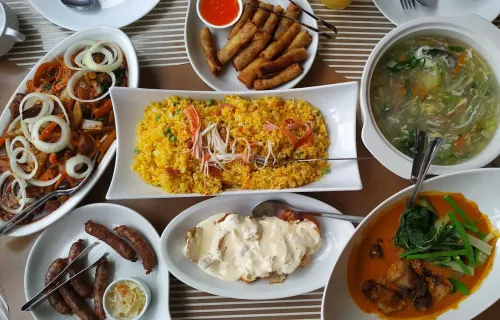
Filipino Food: 12 Essential Dishes (With Tagalog Names)
Filipino food, from adobo to halo-halo: learn the Tagalog names, pronunciations, and ingredients behind 12 dishes you'll want to try on your first trip.