bigo
bigô with stress marks
disappointed; failed
Usage Note
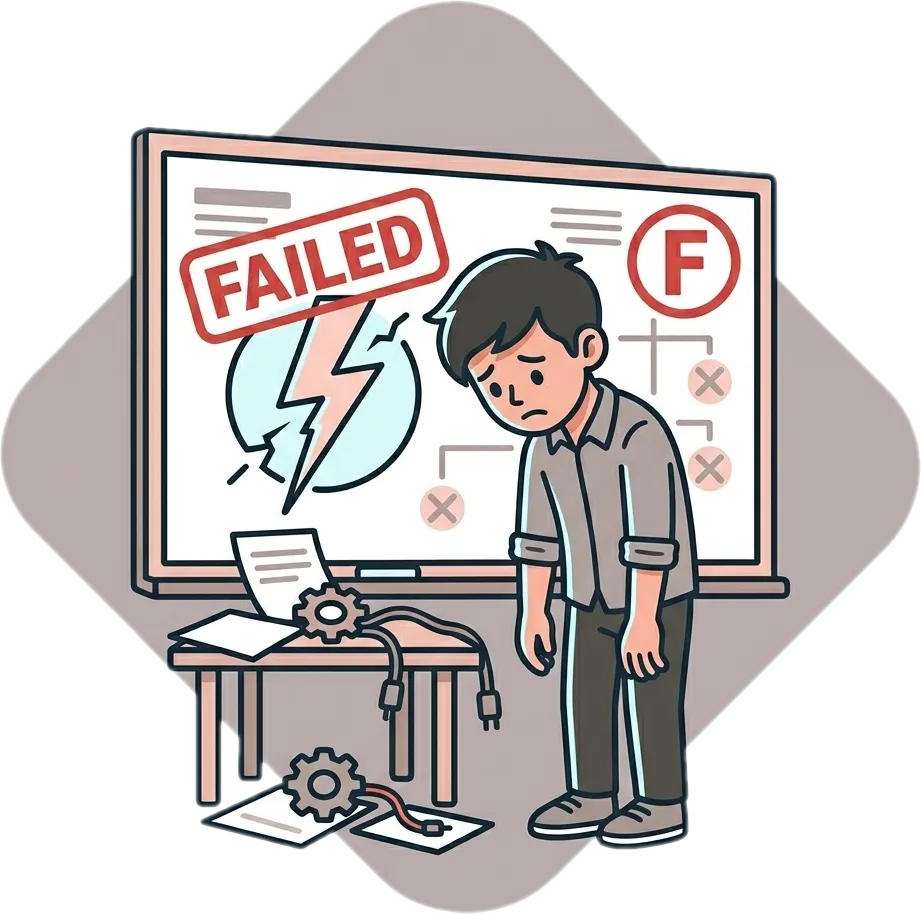
Bigo describes a person who has failed in an endeavor or suffered romantic rejection, capturing both the defeat and the emotional sting. It is a common theme in Filipino songs and dramas to convey deep heartbreak or the frustration of thwarted hopes.
Examples
" Bigo ako kahapon. "
Natural Translation
I was disappointed yesterday.
Literal Translation
Disappointed I yesterday.
" Bigo ako sa aking pagsusulit. "
Natural Translation
I failed in my exam.
Literal Translation
Failed I in my exam.
" Bagaman bigo siya sa pag-ibig, hindi siya tumigil sa pangarap na makahanap ng tunay na kapareha. "
Natural Translation
Although she was heartbroken in love, she did not stop dreaming of finding a true partner.
Literal Translation
Although disappointed she in love, not she stopped in dream that to-find of true partner.
Take Tagalog with you
The full course, a 12,500-word dictionary, and flashcards that make every word stick — free to start on iOS and Android.




Tagalog builds thousands of words from a few hundred roots.
How Tagalog words workActor Focus Verbs
Object Focus Verbs
Related Words
Explore Tagalog by topic
Free guides on grammar, vocabulary, and culture to take you past single-word lookups.

Spaced Repetition for Tagalog: How Flashcards Make Words Stick
Cramming Tagalog vocabulary fails. See how spaced repetition — the science behind smart flashcards — makes words stick for the long term.

Ng vs Nang in Tagalog: The Spelling Rule
Ng vs nang sound identical but spell differently. Use ng to mark nouns (of, the object), and nang for how, when, repetition, and counting time.

Tagalog Time Expressions: Past, Present & Future Guide
Tagalog has no tenses — it uses aspect. Learn time words, days of the week, clock time, and the aspect system, with vocabulary tables and cultural notes.

Is Tagalog Hard to Learn? An Honest Answer
Tagalog takes around 1,100 hours to reach professional proficiency. Here is what is easy, what is hard, and what to expect at 3, 6, and 12 months.