bihag
bíhag with stress marks
prisoner, captive
Usage Note
Bihag means a person held captive or taken prisoner. As a verb, 'bihaging' means to capture or take hostage. It appears in historical, military, and literary contexts, and also figuratively — 'nabihag ang puso ko' (my heart was captured) — a common expression of being swept away romantically.
Examples
" Maraming bihag ang digmaan. "
Natural Translation
The war has many captives.
Literal Translation
Many captive the war.
" Nabihag ng kaaway ang ilan sa aming mga kasama. "
Natural Translation
The enemy captured some of our companions.
Literal Translation
Captured-by-the enemy some of our companions.
" Ang mga bihag na dinala sa kampo ay pinalaya lamang matapos ang mahabang pakikipag-usap sa pagitan ng dalawang panig. "
Natural Translation
The captives brought to the camp were only freed after lengthy talks between the two sides.
Literal Translation
The plural captive that brought to camp were freed only after the long conversation between of two side.
Take Tagalog with you
The full course, a 12,500-word dictionary, and flashcards that make every word stick — free to start on iOS and Android.




Tagalog builds thousands of words from a few hundred roots.
How Tagalog words workActor Focus Verbs
Object Focus Verbs
Related Words
- AWOL absence without leave
- Amboy short for American boy
- Ati ethnolinguistic group in Panay
- Balbalan ethnolinguistic group (Kalinga)
- Hiligaynon ethnolinguistic group/language
- Ilokana female native of the Ilocos region; Ilokana woman
- Ilokano Ethnolinguistic group in Ilocos
- Ilonggo Language/People of Western Visayas
Explore Tagalog by topic
Free guides on grammar, vocabulary, and culture to take you past single-word lookups.
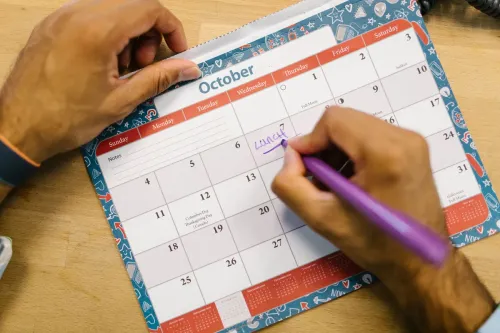
Days of the Week and Months in Tagalog
The days of the week and months in Tagalog are Spanish loanwords. Learn all 7 days and 12 months with pronunciation, plus how to say dates and 'every Monday.'

Na vs -ng in Tagalog: The Linker Rule Made Simple
When do you use na vs -ng in Tagalog? One simple rule, with clear examples, memory tips, and common mistakes explained for English-speaking beginners.

Tagalog Time Expressions: Past, Present & Future Guide
Tagalog has no tenses — it uses aspect. Learn time words, days of the week, clock time, and the aspect system, with vocabulary tables and cultural notes.

How to Say "I Love You" in Tagalog: Phrases & Meaning
Learn how to say I love you in Tagalog. Mahal kita, Iniibig kita, and Filipino terms of endearment for partners, family, and friends — with cultural notes.