dayo
dayò with stress marks
foreigner; stranger
Usage Note
Dayo refers to someone who comes from elsewhere — a visitor, migrant, or outsider to a community. It can be used neutrally or with mild suspicion depending on context. In modern usage it often describes internal migrants (people from other provinces) as much as foreign nationals.
Examples
" Dayo lang ako rito. "
Natural Translation
I'm just a stranger here.
Literal Translation
Stranger only I here.
" Maraming dayo ang pumunta sa probinsya para sa pista opisyal. "
Natural Translation
Many outsiders came to the province for the town fiesta.
Literal Translation
Many strangers the ones-who-came to-the province for fiesta official.
" Bilang dayo sa bayan, unti-unti niyang natutunan ang mga kaugalian ng mga taga-roon upang hindi niya maramdamang siya ay iba. "
Natural Translation
As an outsider in the town, he slowly learned the customs of the locals so that he wouldn't feel out of place.
Literal Translation
As stranger in town, little-by-little his learned the customs of the locals so-that not his can-feel he is different.
Take Tagalog with you
The full course, a 12,500-word dictionary, and flashcards that make every word stick — free to start on iOS and Android.




Tagalog builds thousands of words from a few hundred roots.
How Tagalog words workRelated Words
- AWOL absence without leave
- Amboy short for American boy
- Ati ethnolinguistic group in Panay
- Balbalan ethnolinguistic group (Kalinga)
- Hiligaynon ethnolinguistic group/language
- Ilokana female native of the Ilocos region; Ilokana woman
- Ilokano Ethnolinguistic group in Ilocos
- Ilonggo Language/People of Western Visayas
Explore Tagalog by topic
Free guides on grammar, vocabulary, and culture to take you past single-word lookups.

Tagalog Pronouns Explained: Complete Chart with Examples
Every Tagalog pronoun explained with clear charts: ang/ng/sa forms, tayo vs kami, ikaw vs ka, politeness markers, and the mistakes beginners make.
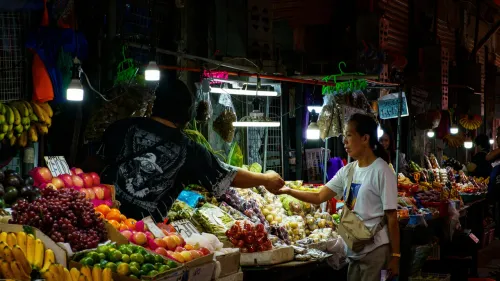
Tagalog Numbers 1-100: Counting, Time & Money Explained
Learn Tagalog numbers 1-100 and beyond. Master both native and Spanish-derived counting systems, plus telling time, reading prices, and ordinals.

Magkano: How to Ask "How Much" in Tagalog
Magkano means how much in Tagalog. Learn to ask a price, tell it apart from ilan and gaano, sound polite with po, and haggle at the palengke.
May vs Mayroon vs Meron: Have & There Is
May vs mayroon in Tagalog finally made simple: one rule decides which to use, plus how meron and wala fit the same have and there-is family.