dulas
dulás with stress marks
slipperiness
Usage Note
Dulas refers to slipperiness and most commonly appears as the adjective madulas to describe wet or oily surfaces. The verb form nadulas describes accidentally slipping or falling, making it a practical word to know for navigating rainy-season floors and wet market aisles.
Examples
" Mataas ang dulas ng sahig. "
Natural Translation
The floor's slipperiness is high.
Literal Translation
High the slipperiness of floor.
" Delikado ang dulas ng sahig. "
Natural Translation
The slipperiness of the floor is dangerous.
Literal Translation
Dangerous the slipperiness of floor.
" Dahil sa dulas ng daan pagkatapos ng ulan, marami sa mga motorista ang halos madulas at mawalan ng balanse. "
Natural Translation
Because of the slipperiness of the road after the rain, many of the motorists nearly slipped and lost their balance.
Literal Translation
Because of slipperiness of road after of rain, many of the motorists almost slip and lose of balance.
Take Tagalog with you
The full course, a 12,500-word dictionary, and flashcards that make every word stick — free to start on iOS and Android.




Tagalog builds thousands of words from a few hundred roots.
How Tagalog words workDerived Words
Actor Focus Verbs
Object Focus Verbs
Related Words
Explore Tagalog by topic
Free guides on grammar, vocabulary, and culture to take you past single-word lookups.

Mano Po and Filipino Etiquette: A Visitor's Guide
Mano po presses an elder's hand to your forehead as a blessing. Learn who to mano, how to lip-point, and the etiquette that wins over a Filipino family.

Ng vs Nang in Tagalog: The Spelling Rule
Ng vs nang sound identical but spell differently. Use ng to mark nouns (of, the object), and nang for how, when, repetition, and counting time.
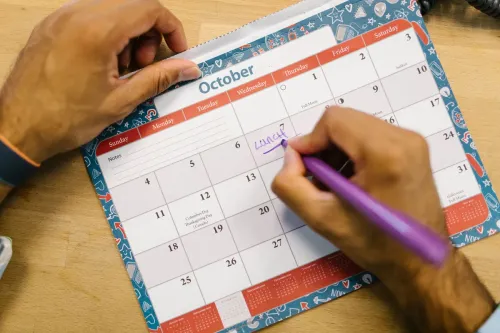
Days of the Week and Months in Tagalog
The days of the week and months in Tagalog are Spanish loanwords. Learn all 7 days and 12 months with pronunciation, plus how to say dates and 'every Monday.'

Is Tagalog Hard to Learn? An Honest Answer
Tagalog takes around 1,100 hours to reach professional proficiency. Here is what is easy, what is hard, and what to expect at 3, 6, and 12 months.