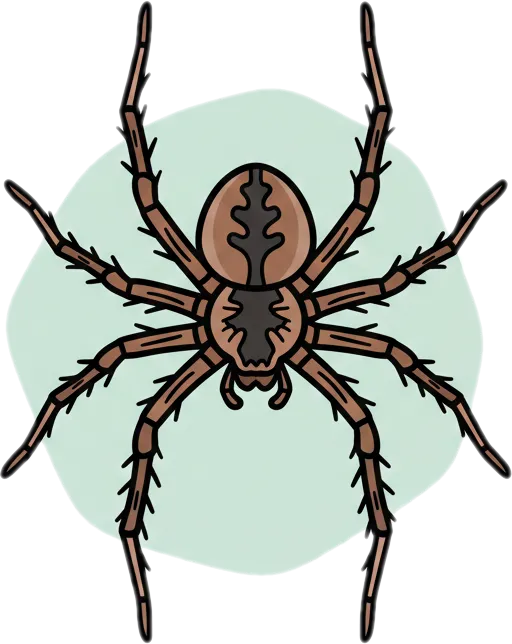
From root: gagamba
Conjugations
Past (Completed)
naggagamba
nag-ga-GAM-ba
hunted for spiders
Present (Incomplete)
naggagagamba
nag-ga-ga-GAM-ba
hunting for spiders
Future (Contemplated)
maggagagamba
mag-ga-ga-GAM-ba
will hunt for spiders
Usage Note
Maggagamba is used when referring to the traditional Filipino pastime of hunting for spiders, usually in bushes or trees, for the purpose of spider wrestling. It is an informal term most commonly heard among children or in rural settings.
Examples
" Maggagagamba kami mamaya. "
Natural Translation
We'll hunt for spiders later.
Literal Translation
Will-hunt-for-spiders we later.
" Mahilig kaming maggagamba noong bata pa kami. "
Natural Translation
We loved hunting for spiders when we were young.
Literal Translation
Fond we to-hunt-for-spiders when young still we.
" Tuwing bakasyon sa probinsya, naggagamba kami ng aking mga pinsan sa mga palumpong bago magtakipsilim. "
Natural Translation
Every vacation in the province, my cousins and I would hunt for spiders in the bushes before dusk.
Literal Translation
Every vacation in province, hunted-for-spiders we with my cousins in the bushes before to-dusk.
Take Tagalog with you
The full course, a 12,500-word dictionary, and flashcards that make every word stick — free to start on iOS and Android.




Tagalog builds thousands of words from a few hundred roots.
How Tagalog words workWord family
gagamba has 2 related forms built from the same root.
Related Words
Explore Tagalog by topic
Free guides on grammar, vocabulary, and culture to take you past single-word lookups.

Ng vs Nang in Tagalog: The Spelling Rule
Ng vs nang sound identical but spell differently. Use ng to mark nouns (of, the object), and nang for how, when, repetition, and counting time.

Filipino Food: 12 Essential Dishes (With Tagalog Names)
Filipino food, from adobo to halo-halo: learn the Tagalog names, pronunciations, and ingredients behind 12 dishes you'll want to try on your first trip.

Mano Po and Filipino Etiquette: A Visitor's Guide
Mano po presses an elder's hand to your forehead as a blessing. Learn who to mano, how to lip-point, and the etiquette that wins over a Filipino family.

Tagalog Time Expressions: Past, Present & Future Guide
Tagalog has no tenses — it uses aspect. Learn time words, days of the week, clock time, and the aspect system, with vocabulary tables and cultural notes.