gapiin
gapiín with stress marks
to defeat [him/her/it]
From root: gapi
Conjugations
Past (Completed)
ginapi
gi-na-PI
defeated
Present (Incomplete)
ginagapi
gi-na-ga-PI
is being defeated
Future (Contemplated)
gagapiin
ga-ga-pi-IN
will be defeated
Usage Note
Gapiin is the object-focus infinitive of gapi, used when the opponent, team, or obstacle being overcome is the grammatical focus. It is common in sports journalism and political rhetoric, and can describe defeating an enemy in battle, a rival in competition, or a systemic problem like poverty.
Examples
" Gusto naming gapiin ang kalaban. "
Natural Translation
We want to defeat the opponent.
Literal Translation
Want we to defeat the opponent.
" Kaya natin na gapiin ang takot sa ating puso. "
Natural Translation
We can defeat the fear in our hearts.
Literal Translation
Can we to defeat the fear in our heart.
" Naniniwala ang koponan na kaya nilang gapiin ang kampeon kung magsasama-sama silang lahat sa huling laro. "
Natural Translation
The team believes they can defeat the champions if they all come together in the final game.
Literal Translation
Believes the team that can they to defeat the champion if will-come-together they all in last game.
Take Tagalog with you
The full course, a 12,500-word dictionary, and flashcards that make every word stick — free to start on iOS and Android.




Tagalog builds thousands of words from a few hundred roots.
How Tagalog words workWord family
gapi has 1 related form built from the same root.
Related Words
Explore Tagalog by topic
Free guides on grammar, vocabulary, and culture to take you past single-word lookups.

Tagalog Verb Focus System Explained (It's Not Active vs. Passive)
The Tagalog verb focus system isn't active vs. passive. Learn actor focus, object focus, and more with clear examples that finally make it click.

Mano Po and Filipino Etiquette: A Visitor's Guide
Mano po presses an elder's hand to your forehead as a blessing. Learn who to mano, how to lip-point, and the etiquette that wins over a Filipino family.
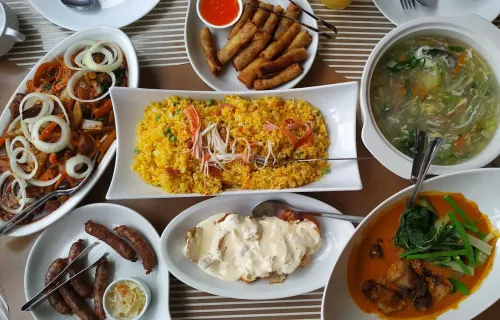
Filipino Food: 12 Essential Dishes (With Tagalog Names)
Filipino food, from adobo to halo-halo: learn the Tagalog names, pronunciations, and ingredients behind 12 dishes you'll want to try on your first trip.

Tagalog Greetings: How to Say Hello, Goodbye & Po/Opo
Master Tagalog greetings with pronunciation: kumusta, magandang umaga, po and opo polite forms, time-of-day phrases, and the mano po tradition.