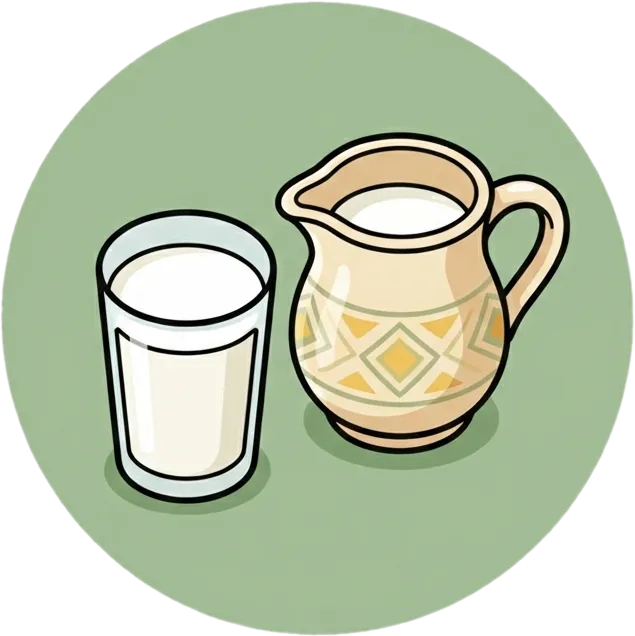
From root: gatas
Conjugations
Past (Completed)
naggatas
nag-GA-tas
used or added milk
Present (Incomplete)
naggagatas
nag-ga-GA-tas
using or adding milk
Future (Contemplated)
maggagatas
mag-ga-GA-tas
will use or add milk
Usage Note
Maggatas is used when adding milk to a beverage like coffee or when making milk a primary component of a simple meal or drink. It is often heard in the context of breakfast or preparing snacks for children.
Examples
" Maggatas ka sa kape mo. "
Natural Translation
Put milk in your coffee.
Literal Translation
Add-milk you in coffee your.
" Huwag kang maggatas sa kape ko. "
Natural Translation
Do not add milk to my coffee.
Literal Translation
Do not you use milk in coffee mine.
" Kapag nagluluto ako ng tsokolate para sa mga bata, lagi akong naggagatas upang lumambot ang lasa nito. "
Natural Translation
When I cook chocolate for the children, I always add milk so its taste becomes milder.
Literal Translation
When cooking I of chocolate for the children, always I add-milk so soften the taste its.
Take Tagalog with you
The full course, a 12,500-word dictionary, and flashcards that make every word stick — free to start on iOS and Android.




Tagalog builds thousands of words from a few hundred roots.
How Tagalog words workWord family
gatas has 7 related forms built from the same root.
Related Words
Explore Tagalog by topic
Free guides on grammar, vocabulary, and culture to take you past single-word lookups.

Tagalog Question Words: Ano, Sino, Saan & More
Tagalog question words like ano, sino, and saan need the right frame to work. Learn the ang-vs-pronoun rule, confusable pairs, and the ba particle with audio.

Tagalog Slang Guide: 20 Words You'll Hear on TikTok
Tagalog slang explained: lodi, petmalu, werpa, astig, chika and more. Decode Filipino TikTok comments, group chats, and pop culture with this practical guide.

How Long Does It Take to Learn Tagalog?
Survival Tagalog takes ~3-4 weeks and comfortable conversation 6-12 months. FSI's 1,100 hours is the professional bar, not the talking-to-family bar.
Philippines Geography for Learners: Islands & Language
Philippines geography for Tagalog learners: 7,641 islands, three island groups, and the Southern Luzon heartland where the Tagalog language was born.