From root: hanap
Conjugations
Past (Completed)
naghanap
nag-HA-nap
searched
Present (Incomplete)
naghahanap
nag-ha-HA-nap
searching
Future (Contemplated)
maghahanap
mag-ha-HA-nap
will search
Usage Note
Maghanap is used when someone is actively looking for an object, person, or opportunity like a job. It is an actor-focus verb, so it emphasizes the person doing the searching rather than the specific object being sought.
Examples
" Maghanap ka ng upuan. "
Natural Translation
Look for a seat.
Literal Translation
Search you of seat.
" Kailangan kong maghanap ng trabaho. "
Natural Translation
I need to look for a job.
Literal Translation
Need I to search for work.
" Kailangan kong maghanap ng bagong trabaho dahil malapit nang magsara ang kompanyang pinagtatrabahuhan ko ngayon. "
Natural Translation
I need to look for a new job because the company I currently work for is about to close.
Literal Translation
Need I to-search of new job because near already to-close the company being-worked-at I now.
Take Tagalog with you
The full course, a 12,500-word dictionary, and flashcards that make every word stick — free to start on iOS and Android.




Tagalog builds thousands of words from a few hundred roots.
How Tagalog words workWord family
hanap has 9 related forms built from the same root.
Related Words
Explore Tagalog by topic
Free guides on grammar, vocabulary, and culture to take you past single-word lookups.

Tagalog Numbers 1-100: Counting, Time & Money Explained
Learn Tagalog numbers 1-100 and beyond. Master both native and Spanish-derived counting systems, plus telling time, reading prices, and ordinals.
Philippines Geography for Learners: Islands & Language
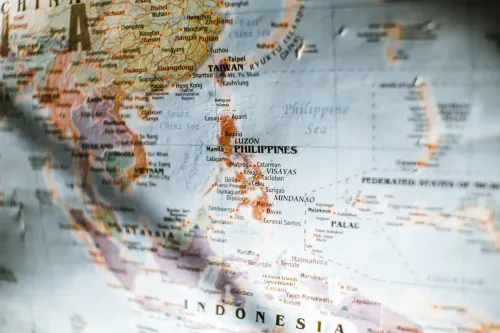
Philippines geography for Tagalog learners: 7,641 islands, three island groups, and the Southern Luzon heartland where the Tagalog language was born.
Po and Opo in Tagalog: Where to Put Them Right
Po and opo confuse learners — but placement follows one rule. Where po goes in a sentence, why it's opo not 'oo po', and the pronoun shift to learn.

Tagalog Word Order: Sentence Structure Made Simple
Why Tagalog puts the verb first, and how ang, ng, and sa markers work. A clear guide to VSO word order, forming questions, and negation.