hipan
hipán with stress marks
to blow on [it]
From root: hihip
Conjugations
Past (Completed)
hinipan
hi-ni-PAN
blew on
Present (Incomplete)
hinihipan
hi-ni-hi-PAN
is being blown on
Future (Contemplated)
hihipan
hi-hi-PAN
will be blown on
Usage Note
Hipan is the object-focus locative infinitive of hihip, built on the syncopated stem hip- — a regular phonological pattern for this verb class. The thing being blown on — a candle, a wound, food being cooled — is the grammatical focus; the actor-focus partner is humihip.
Examples
" Hipan mo ang kandila. "
Natural Translation
Blow on the candle.
Literal Translation
Blow-on you the candle.
" Kailangan mo na hipan ang kandila sa ibabaw ng keyk. "
Natural Translation
You need to blow on the candle on top of the cake.
Literal Translation
Need you to blow on the candle on top of cake.
" Bago mo kainin ang sopas, hipan mo muna nang dahan-dahan dahil napakainit pa nito. "
Natural Translation
Before you eat the soup, blow on it gently first because it's still very hot.
Literal Translation
Before you eat the soup, blow-on you first gently because very-hot still this.
Take Tagalog with you
The full course, a 12,500-word dictionary, and flashcards that make every word stick — free to start on iOS and Android.




Tagalog builds thousands of words from a few hundred roots.
How Tagalog words workWord family
hihip has 1 related form built from the same root.
Related Words
Explore Tagalog by topic
Free guides on grammar, vocabulary, and culture to take you past single-word lookups.

Tagalog Root Words: Learn a Few Hundred, Understand Thousands
Tagalog root words unlock vocabulary fast: learn a few hundred and recognize thousands. Real word families, examples, and a practical study strategy.

Tagalog Affixes Explained: A Beginner's Guide to Word Building
Tagalog affixes turn one root word into dozens of meanings. Learn prefixes, infixes, suffixes, and circumfixes with clear examples for beginners.

Filipino Family Words and Honorifics: Ate, Kuya & Tita
Filipino family words like ate, kuya, tita, tito, lolo, and lola go far beyond family — learn how Filipinos use them with strangers, plus mano po etiquette.
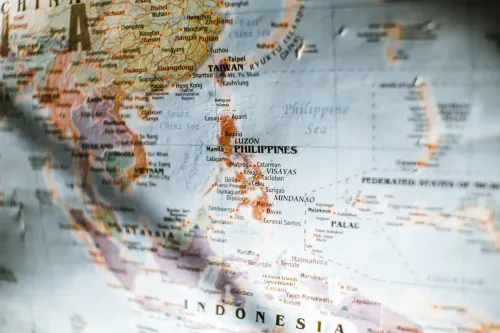
Philippines Geography for Learners: Islands & Language
Philippines geography for Tagalog learners: 7,641 islands, three island groups, and the Southern Luzon heartland where the Tagalog language was born.