hulaan
hulaán with stress marks
to guess [it]
From root: hula
Conjugations
Past (Completed)
hinulaan
hi-nu-la-AN
guessed
Present (Incomplete)
hinuhulaan
hi-nu-hu-la-AN
is being guessed
Future (Contemplated)
huhulaan
hu-hu-la-AN
will be guessed
Usage Note
Hulaan is the object-focus (locative) infinitive of hula, where the thing being guessed — an answer, an identity, a number — is the grammatical focus. It is extremely common in riddle-telling, guessing games, and parlor amusements; the imperative form is a staple opener for riddles in Filipino children's games.
Examples
" Hulaan mo ang sagot. "
Natural Translation
Guess the answer.
Literal Translation
Guess you the answer.
" Subukan mo na hulaan ang tamang numero sa laro. "
Natural Translation
Try to guess the correct number in the game.
Literal Translation
Try you to guess the correct number in game.
" Mahirap hulaan kung ilang taon na siya dahil bata pa ang mukha niya kahit matanda na. "
Natural Translation
It's hard to guess how old she is because her face still looks young even though she's already old.
Literal Translation
Difficult to-guess how-many years already she because young still the face her even-though old already.
Take Tagalog with you
The full course, a 12,500-word dictionary, and flashcards that make every word stick — free to start on iOS and Android.




Tagalog builds thousands of words from a few hundred roots.
How Tagalog words workWord family
hula has 1 related form built from the same root.
Related Words
Explore Tagalog by topic
Free guides on grammar, vocabulary, and culture to take you past single-word lookups.
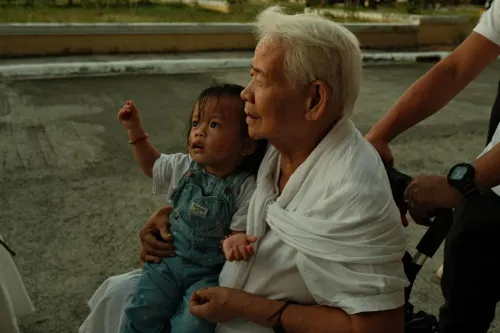
Po and Opo in Tagalog: Where to Put Them Right
Po and opo confuse learners — but placement follows one rule. Where po goes in a sentence, why it's opo not 'oo po', and the pronoun shift to learn.

Filipino Family Words and Honorifics: Ate, Kuya & Tita
Filipino family words like ate, kuya, tita, tito, lolo, and lola go far beyond family — learn how Filipinos use them with strangers, plus mano po etiquette.

Tagalog Greetings: How to Say Hello, Goodbye & Po/Opo
Master Tagalog greetings with pronunciation: kumusta, magandang umaga, po and opo polite forms, time-of-day phrases, and the mano po tradition.
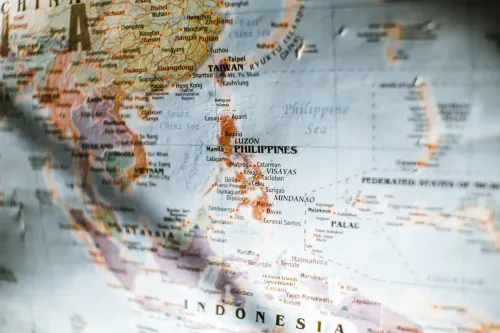
Philippines Geography for Learners: Islands & Language
Philippines geography for Tagalog learners: 7,641 islands, three island groups, and the Southern Luzon heartland where the Tagalog language was born.