ibaba
ibabâ with stress marks
down, bottom
Usage Note
Ibaba means the bottom, lower part, or downstairs — both as a noun (the bottom of something) and as a directional adverb (go down, below). It is used for physical direction and location in everyday speech. It contrasts with itaas (up, above). Common in giving directions or describing the location of objects and floors in a building.
Examples
" Nasa ibaba ang kusina. "
Natural Translation
The kitchen is downstairs.
Literal Translation
At-the bottom the kitchen.
" Nasaan ang pinto sa ibaba? "
Natural Translation
Where is the door downstairs?
Literal Translation
Where the door at-the bottom?
" Kung hahanapin mo ang susi, nahulog ito sa ibaba kaya tingnan mo muna ang sahig bago ka magreklamo. "
Natural Translation
If you're looking for the key, it fell down to the bottom, so check the floor first before you complain.
Literal Translation
If will-look you the key, fell it at bottom so look you first the floor before you complain.
Take Tagalog with you
The full course, a 12,500-word dictionary, and flashcards that make every word stick — free to start on iOS and Android.




Tagalog builds thousands of words from a few hundred roots.
How Tagalog words workRelated Words
Explore Tagalog by topic
Free guides on grammar, vocabulary, and culture to take you past single-word lookups.
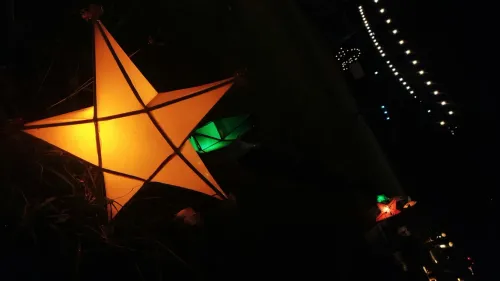
Philippine Christmas Traditions: World's Longest Holiday
Philippine Christmas traditions run four months — from Ber-month carols to Simbang Gabi dawn masses, Noche Buena feasts, and parol lanterns lighting every street.

Mano Po and Filipino Etiquette: A Visitor's Guide
Mano po presses an elder's hand to your forehead as a blessing. Learn who to mano, how to lip-point, and the etiquette that wins over a Filipino family.

Tagalog Word Order: Sentence Structure Made Simple
Why Tagalog puts the verb first, and how ang, ng, and sa markers work. A clear guide to VSO word order, forming questions, and negation.
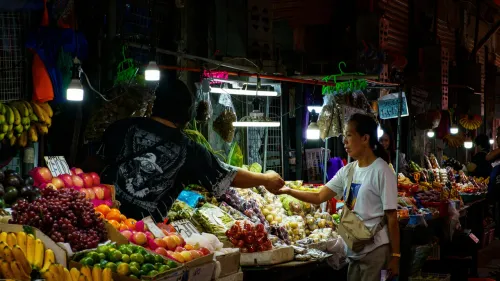
Tagalog Numbers 1-100: Counting, Time & Money Explained
Learn Tagalog numbers 1-100 and beyond. Master both native and Spanish-derived counting systems, plus telling time, reading prices, and ordinals.