ibayo
ibáyo with stress marks
other side; double effort
Usage Note
Ibayo has two distinct senses. Literally it means the other side or the far side — across a body of water or a boundary. Figuratively, it is used in the phrase 'ibayong pagsisikap' (doubled effort) to mean redoubled or intensified. The figurative sense appears in motivational and inspirational writing and speeches encouraging greater effort.
Examples
" Nasa ibayo ang bahay nila. "
Natural Translation
Their house is on the other side.
Literal Translation
At-the other-side the house their.
" Pumunta siya sa ibayo. "
Natural Translation
He/She went to the other side.
Literal Translation
Went he/she to-the other-side.
" Sa ibayong pagsisikap ng buong pamilya, natapos nila ang pag-aaral ng kanilang panganay sa kabila ng hirap. "
Natural Translation
Through the redoubled effort of the whole family, they managed to put their eldest through school despite the hardship.
Literal Translation
In-the doubled effort of-the whole family, finished they the studies of their eldest in spite of-the hardship.
Take Tagalog with you
The full course, a 12,500-word dictionary, and flashcards that make every word stick — free to start on iOS and Android.




Tagalog builds thousands of words from a few hundred roots.
How Tagalog words workRelated Words
Explore Tagalog by topic
Free guides on grammar, vocabulary, and culture to take you past single-word lookups.
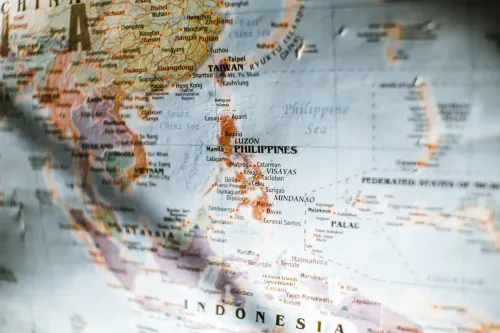
Philippines Geography for Learners: Islands & Language
Philippines geography for Tagalog learners: 7,641 islands, three island groups, and the Southern Luzon heartland where the Tagalog language was born.

Tagalog Question Words: Ano, Sino, Saan & More
Tagalog question words like ano, sino, and saan need the right frame to work. Learn the ang-vs-pronoun rule, confusable pairs, and the ba particle with audio.

How to Say Sorry in Tagalog: Patawad vs Pasensya
How to say sorry in Tagalog: patawad, pasensya na, and paumanhin compared on a simple severity-and-formality ladder so you pick the right word every time.

Tagalog Time Expressions: Past, Present & Future Guide
Tagalog has no tenses — it uses aspect. Learn time words, days of the week, clock time, and the aspect system, with vocabulary tables and cultural notes.