inisyatiba
inisyatíba with stress marks
initiative
Usage Note
Inisyatiba is borrowed from English initiative and is used in workplace, political, and personal development contexts to describe proactive action or leading an effort. In political discourse it can refer to legislative proposals, and it is valued in professional culture as a sign of leadership.
Examples
" May inisyatiba ang batang iyon. "
Natural Translation
That child has initiative.
Literal Translation
Has initiative the child that.
" Kailangan ng inisyatiba sa trabaho. "
Natural Translation
Initiative is needed at work.
Literal Translation
Need of initiative in work.
" Dahil sa kanyang inisyatiba, naayos ang problema bago pa ito napansin ng mga namumuno. "
Natural Translation
Because of her initiative, the problem was fixed even before the leaders noticed it.
Literal Translation
Because of her initiative, was-fixed the problem before even it was-noticed by-the leaders.
Take Tagalog with you
The full course, a 12,500-word dictionary, and flashcards that make every word stick — free to start on iOS and Android.




Tagalog builds thousands of words from a few hundred roots.
How Tagalog words workRelated Words
- AWOL absence without leave
- Amboy short for American boy
- Ati ethnolinguistic group in Panay
- Balbalan ethnolinguistic group (Kalinga)
- Hiligaynon ethnolinguistic group/language
- Ilokana female native of the Ilocos region; Ilokana woman
- Ilokano Ethnolinguistic group in Ilocos
- Ilonggo Language/People of Western Visayas
Explore Tagalog by topic
Free guides on grammar, vocabulary, and culture to take you past single-word lookups.
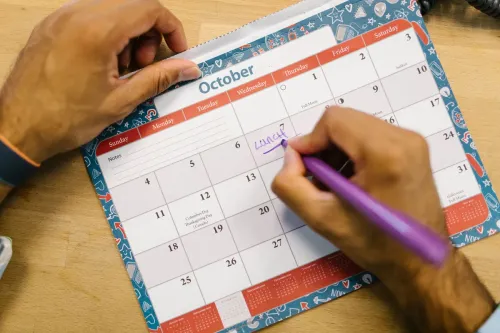
Days of the Week and Months in Tagalog
The days of the week and months in Tagalog are Spanish loanwords. Learn all 7 days and 12 months with pronunciation, plus how to say dates and 'every Monday.'

Philippine Christmas Traditions: World's Longest Holiday
Philippine Christmas traditions run four months — from Ber-month carols to Simbang Gabi dawn masses, Noche Buena feasts, and parol lanterns lighting every street.

Tagalog Time Expressions: Past, Present & Future Guide
Tagalog has no tenses — it uses aspect. Learn time words, days of the week, clock time, and the aspect system, with vocabulary tables and cultural notes.

Languages of the Philippines: Tagalog, Cebuano, and More
Languages of the Philippines: one national language (Filipino) plus 180+ regional languages. Here's who speaks what, where, and why it matters to you.