Usage Note
Kabo is borrowed from Spanish cabo (corporal, literally head or end) and refers to the military rank of corporal in the Philippine Army, a term still in active use within the Armed Forces of the Philippines. Casual Filipino speakers may also use it informally to address or nickname someone of that rank.
Examples
" Kabo ang tatay niya. "
Natural Translation
His father is a corporal.
Literal Translation
Corporal the father his.
" Ang kabo ay nagtuturo sa mga bagong sundalo kung paano mag-drill. "
Natural Translation
The corporal is teaching the new soldiers how to drill.
Literal Translation
The corporal is teaching to-the new soldiers how to-drill.
" Matapos ang ilang taon ng paglilingkod, itinaas sa ranggo ng kabo ang batang sundalo dahil sa kanyang katapangan. "
Natural Translation
After several years of service, the young soldier was promoted to the rank of corporal because of his bravery.
Literal Translation
After the several years of service, raised to rank of corporal the young soldier because of his bravery.
Take Tagalog with you
The full course, a 12,500-word dictionary, and flashcards that make every word stick — free to start on iOS and Android.




Tagalog builds thousands of words from a few hundred roots.
How Tagalog words workRelated Words
Explore Tagalog by topic
Free guides on grammar, vocabulary, and culture to take you past single-word lookups.
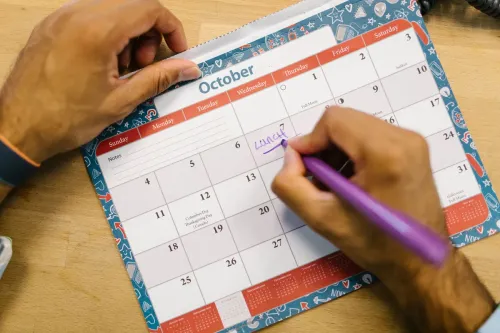
Days of the Week and Months in Tagalog
The days of the week and months in Tagalog are Spanish loanwords. Learn all 7 days and 12 months with pronunciation, plus how to say dates and 'every Monday.'

Is Tagalog Hard to Learn? An Honest Answer
Tagalog takes around 1,100 hours to reach professional proficiency. Here is what is easy, what is hard, and what to expect at 3, 6, and 12 months.

Seasons in the Philippines: A Tagalog Guide
The Philippines has two seasons, not four. Learn tag-araw, tag-ulan, and taglamig, the generative tag- prefix, and the weather vocabulary to match.

Languages of the Philippines: Tagalog, Cebuano, and More
Languages of the Philippines: one national language (Filipino) plus 180+ regional languages. Here's who speaks what, where, and why it matters to you.