kabog
loud sound of falling object
Also means
In modern slang, kabog means to decisively beat or outperform someone — 'Kinabog niya ang kalaban' means 'He crushed his opponent.'
Usage Note
Kabog is originally an onomatopoeic word for the dull, heavy thud of something falling. In contemporary Filipino slang it has evolved into a verb meaning to dominate or destroy a competitor — used in gaming, sports, debates, and performance contexts — and the slang usage is now widespread among young Filipinos online.
Examples
" May malakas na kabog sa kusina. "
Natural Translation
There was a loud thud in the kitchen.
Literal Translation
There-is loud that thud in kitchen.
" Ang kabog ay galing sa itaas. "
Natural Translation
The loud thud came from upstairs.
Literal Translation
The loud-thud is from at top.
" Hindi inakala ng kalaban na kakabugin sila ng bagong koponan sa torneo ngayong taon. "
Natural Translation
The opponents didn't expect that the new team would crush them in the tournament this year.
Literal Translation
Not expected by-the opponent that will-crush them by-the new team in tournament this year.
Take Tagalog with you
The full course, a 12,500-word dictionary, and flashcards that make every word stick — free to start on iOS and Android.




Tagalog builds thousands of words from a few hundred roots.
How Tagalog words workActor Focus Verbs
Object Focus Verbs
Related Words
Explore Tagalog by topic
Free guides on grammar, vocabulary, and culture to take you past single-word lookups.
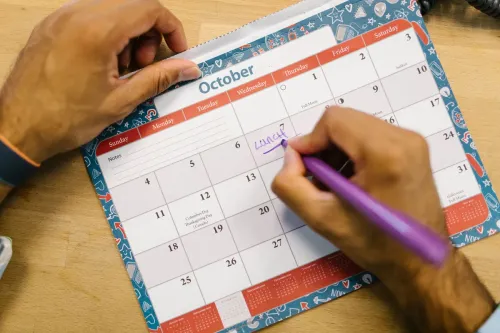
Days of the Week and Months in Tagalog
The days of the week and months in Tagalog are Spanish loanwords. Learn all 7 days and 12 months with pronunciation, plus how to say dates and 'every Monday.'

Ng vs Nang in Tagalog: The Spelling Rule
Ng vs nang sound identical but spell differently. Use ng to mark nouns (of, the object), and nang for how, when, repetition, and counting time.

Magkano: How to Ask "How Much" in Tagalog
Magkano means how much in Tagalog. Learn to ask a price, tell it apart from ilan and gaano, sound polite with po, and haggle at the palengke.

Tagalog Root Words: Learn a Few Hundred, Understand Thousands
Tagalog root words unlock vocabulary fast: learn a few hundred and recognize thousands. Real word families, examples, and a practical study strategy.