magkaladkad
magkaladkád with stress marks
to drag
From root: kaladkad
Conjugations
Past (Completed)
nagkaladkad
nag-ka-lad-KAD
dragged
Present (Incomplete)
nagkakaladkad
nag-ka-ka-lad-KAD
is dragging
Future (Contemplated)
magkakaladkad
mag-ka-ka-lad-KAD
will drag
Usage Note
Magkaladkad is the actor-focus form of kaladkad, used when the person doing the dragging is the subject. It typically describes hauling something heavy along the ground, and pairs with the object-focus form kaladkarin when the thing being dragged is the focus.
Examples
" Tulungan mo akong magkaladkad ng silya. "
Natural Translation
Help me drag a chair.
Literal Translation
Help you me to-drag of chair.
" Mahirap magkaladkad ng sako sa sahig. "
Natural Translation
It is hard to drag a sack on the floor.
Literal Translation
Hard to drag of sack on floor.
" Napilitan kaming magkaladkad ng mabibigat na kahon sa hagdan dahil sira ang elevator nang araw na iyon. "
Natural Translation
We were forced to drag heavy boxes up the stairs because the elevator was broken that day.
Literal Translation
Forced we to-drag of heavy boxes on stairs because broken the elevator that day.
Take Tagalog with you
The full course, a 12,500-word dictionary, and flashcards that make every word stick — free to start on iOS and Android.




Tagalog builds thousands of words from a few hundred roots.
How Tagalog words workWord family
kaladkad has 1 related form built from the same root.
Related Words
Explore Tagalog by topic
Free guides on grammar, vocabulary, and culture to take you past single-word lookups.

Tagalog Slang Guide: 20 Words You'll Hear on TikTok
Tagalog slang explained: lodi, petmalu, werpa, astig, chika and more. Decode Filipino TikTok comments, group chats, and pop culture with this practical guide.

Tagalog Word Order: Sentence Structure Made Simple
Why Tagalog puts the verb first, and how ang, ng, and sa markers work. A clear guide to VSO word order, forming questions, and negation.
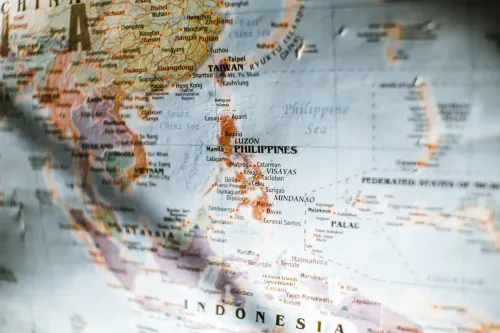
Philippines Geography for Learners: Islands & Language
Philippines geography for Tagalog learners: 7,641 islands, three island groups, and the Southern Luzon heartland where the Tagalog language was born.

Filipino Family Words and Honorifics: Ate, Kuya & Tita
Filipino family words like ate, kuya, tita, tito, lolo, and lola go far beyond family — learn how Filipinos use them with strangers, plus mano po etiquette.