kapitan
kapitán with stress marks
captain; local chief
Usage Note
Kapitan is a Spanish loanword most commonly used in the Philippines for the barangay captain (punong barangay), the elected head of the smallest administrative unit. It also covers military and ship captains, and historically referred to colonial-era local officials.
Examples
" Si Tatay ay kapitan ng barangay. "
Natural Translation
Dad is the barangay captain.
Literal Translation
Father captain of barangay.
" Pumunta kami sa kapitan ng barangay para sa aming reklamong pangkapayapaan. "
Natural Translation
We went to the barangay captain to file our peace complaint.
Literal Translation
Went we to-the captain of-the barangay for our complaint regarding-peace.
" Inihalal nila ang bagong kapitan dahil nangako itong aayusin ang mga kalsada at tutulong sa mga mahihirap na pamilya. "
Natural Translation
They elected the new captain because he promised to fix the roads and help the poor families.
Literal Translation
Elected they the new captain because promised this will-fix the roads and will-help to the poor families.
Take Tagalog with you
The full course, a 12,500-word dictionary, and flashcards that make every word stick — free to start on iOS and Android.




Tagalog builds thousands of words from a few hundred roots.
How Tagalog words workRelated Words
Explore Tagalog by topic
Free guides on grammar, vocabulary, and culture to take you past single-word lookups.
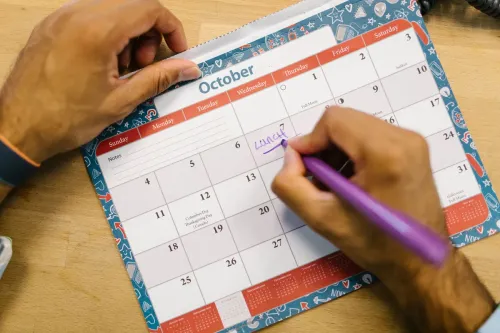
Days of the Week and Months in Tagalog
The days of the week and months in Tagalog are Spanish loanwords. Learn all 7 days and 12 months with pronunciation, plus how to say dates and 'every Monday.'

Philippine Christmas Traditions: World's Longest Holiday
Philippine Christmas traditions run four months — from Ber-month carols to Simbang Gabi dawn masses, Noche Buena feasts, and parol lanterns lighting every street.

Mano Po and Filipino Etiquette: A Visitor's Guide
Mano po presses an elder's hand to your forehead as a blessing. Learn who to mano, how to lip-point, and the etiquette that wins over a Filipino family.

Tagalog Greetings: How to Say Hello, Goodbye & Po/Opo
Master Tagalog greetings with pronunciation: kumusta, magandang umaga, po and opo polite forms, time-of-day phrases, and the mano po tradition.