magkapa
magkapâ with stress marks
to grope in the dark
From root: kapâ
Conjugations
Past (Completed)
nagkapa
nag-ka-PA
groped
Present (Incomplete)
nagkakapa
nag-ka-ka-PA
is groping
Future (Contemplated)
magkakapa
mag-ka-ka-PA
will grope
Usage Note
Magkapa is the actor-focus form of kapâ, used both for physically groping in the dark to find something and figuratively for fumbling through uncertainty without guidance. The figurative sense — navigating a problem blindly — is nearly as common as the literal one.
Examples
" Magkapa ka sa dilim. "
Natural Translation
Grope around in the dark.
Literal Translation
Grope you in dark.
" Mahirap magkapa kapag nawalan ng ilaw sa bahay. "
Natural Translation
It is hard to grope in the dark when the power goes out in the house.
Literal Translation
Hard to grope in dark when lost of light in house.
" Kapag walang gabay na naghahanap ng solusyon, para ka na ring nagkakapa sa madilim na silid. "
Natural Translation
When you search for a solution without guidance, it's as if you are groping around in a dark room.
Literal Translation
When without guide searching of solution, like you also groping in dark room.
Take Tagalog with you
The full course, a 12,500-word dictionary, and flashcards that make every word stick — free to start on iOS and Android.




Tagalog builds thousands of words from a few hundred roots.
How Tagalog words workWord family
kapâ has 1 related form built from the same root.
Related Words
Explore Tagalog by topic
Free guides on grammar, vocabulary, and culture to take you past single-word lookups.

Tagalog Greetings: How to Say Hello, Goodbye & Po/Opo
Master Tagalog greetings with pronunciation: kumusta, magandang umaga, po and opo polite forms, time-of-day phrases, and the mano po tradition.
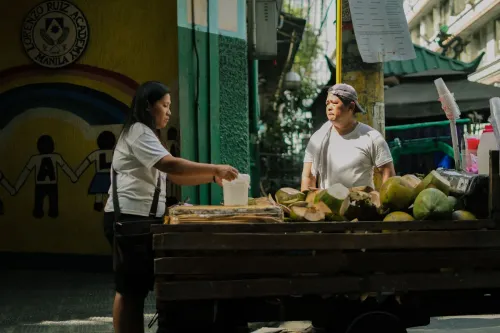
Magkano: How to Ask "How Much" in Tagalog
Magkano means how much in Tagalog. Learn to ask a price, tell it apart from ilan and gaano, sound polite with po, and haggle at the palengke.
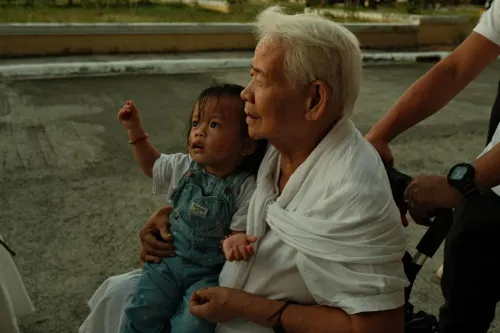
Po and Opo in Tagalog: Where to Put Them Right
Po and opo confuse learners — but placement follows one rule. Where po goes in a sentence, why it's opo not 'oo po', and the pronoun shift to learn.
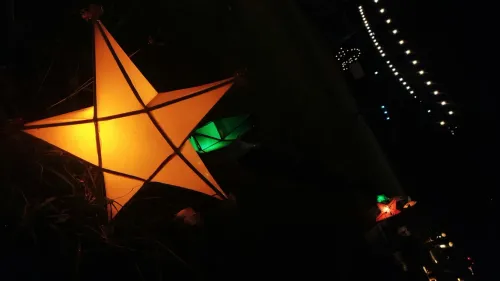
Philippine Christmas Traditions: World's Longest Holiday
Philippine Christmas traditions run four months — from Ber-month carols to Simbang Gabi dawn masses, Noche Buena feasts, and parol lanterns lighting every street.