kasu-kasuan
kasu-kasuán with stress marks
joints (anatomy)
Usage Note
Kasu-kasuan is the reduplicated form referring to the joints of the body — knees, elbows, wrists, and similar articulations. It is a common term in health conversations, especially when describing arthritis or joint pain, which is called 'rayuma' in Tagalog. Elderly Filipinos frequently use this word when talking about physical complaints.
Examples
" Masakit ang kasu-kasuan ko. "
Natural Translation
My joints hurt.
Literal Translation
Painful the joints my.
" Sumasakit ang aking kasu-kasuan tuwing umuulan. "
Natural Translation
My joints ache whenever it rains.
Literal Translation
Aches the my joints every-time rains.
" Ipinapayo ng doktor sa mga matatanda na mag-ehersisyo araw-araw upang manatiling malakas at malusog ang kanilang kasu-kasuan. "
Natural Translation
The doctor advises the elderly to exercise every day so that their joints stay strong and healthy.
Literal Translation
Advises by-the doctor to-the elderly to exercise day-by-day so-that remains strong and healthy the their joints.
Take Tagalog with you
The full course, a 12,500-word dictionary, and flashcards that make every word stick — free to start on iOS and Android.




Tagalog builds thousands of words from a few hundred roots.
How Tagalog words workRelated Words
Explore Tagalog by topic
Free guides on grammar, vocabulary, and culture to take you past single-word lookups.

How to Say "I Love You" in Tagalog: Phrases & Meaning
Learn how to say I love you in Tagalog. Mahal kita, Iniibig kita, and Filipino terms of endearment for partners, family, and friends — with cultural notes.
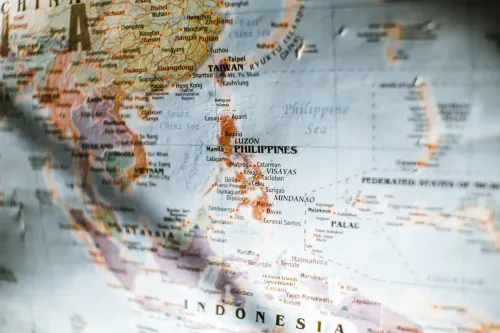
Philippines Geography for Learners: Islands & Language
Philippines geography for Tagalog learners: 7,641 islands, three island groups, and the Southern Luzon heartland where the Tagalog language was born.
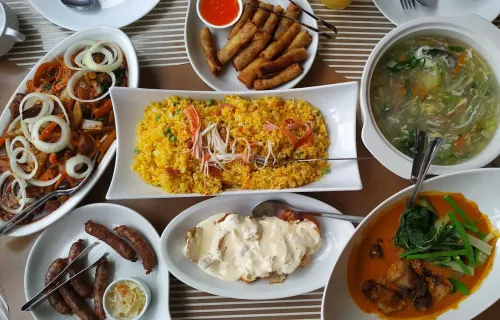
Filipino Food: 12 Essential Dishes (With Tagalog Names)
Filipino food, from adobo to halo-halo: learn the Tagalog names, pronunciations, and ingredients behind 12 dishes you'll want to try on your first trip.

Mano Po and Filipino Etiquette: A Visitor's Guide
Mano po presses an elder's hand to your forehead as a blessing. Learn who to mano, how to lip-point, and the etiquette that wins over a Filipino family.