Also means
Katí with final stress is distinct from káti (low tide) — see káti.
Usage Note
Katí describes the sensation of itchiness on the skin. It is a very common everyday word used when describing allergies, insect bites, rashes, or dry skin. 'Kumakati' (it is itching) is the active form. Itchiness from mosquito bites, a near-universal experience in the tropics, makes this word part of daily Filipino vocabulary.
Examples
" Makati ang likod ko. "
Natural Translation
My back is itchy.
Literal Translation
Itchy the back my.
" May katí ang tela ng damit. "
Natural Translation
The fabric of the dress has an itchiness.
Literal Translation
Has itchy the fabric of dress.
" Kumakati ang aking braso dahil sa kagat ng lamok kaya hindi ako makatulog kagabi. "
Natural Translation
My arm was itching because of mosquito bites, so I couldn't sleep last night.
Literal Translation
Itching the my arm because of bite of mosquito so not I can-sleep last-night.
Take Tagalog with you
The full course, a 12,500-word dictionary, and flashcards that make every word stick — free to start on iOS and Android.




Tagalog builds thousands of words from a few hundred roots.
How Tagalog words workRelated Words
Explore Tagalog by topic
Free guides on grammar, vocabulary, and culture to take you past single-word lookups.
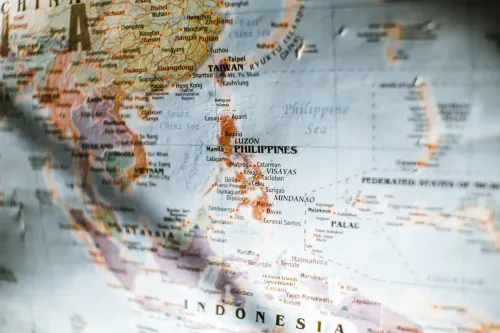
Philippines Geography for Learners: Islands & Language
Philippines geography for Tagalog learners: 7,641 islands, three island groups, and the Southern Luzon heartland where the Tagalog language was born.

Magkano: How to Ask "How Much" in Tagalog
Magkano means how much in Tagalog. Learn to ask a price, tell it apart from ilan and gaano, sound polite with po, and haggle at the palengke.

Tagalog Word Order: Sentence Structure Made Simple
Why Tagalog puts the verb first, and how ang, ng, and sa markers work. A clear guide to VSO word order, forming questions, and negation.

Ng vs Nang in Tagalog: The Spelling Rule
Ng vs nang sound identical but spell differently. Use ng to mark nouns (of, the object), and nang for how, when, repetition, and counting time.