kolokyum
kolókyum with stress marks
colloquium
Usage Note
Kolokyum, a loanword from English via Latin colloquium, refers to a formal academic conference, seminar, or scholarly discussion. It is commonly encountered in university announcements and research institution events, and is strictly a formal register term with no casual everyday use.
Examples
" May kolokyum bukas sa unibersidad. "
Natural Translation
There is a colloquium tomorrow at the university.
Literal Translation
Has colloquium tomorrow in university.
" Mag-aanyaya ng mga eksperto sa susunod na kolokyum ng unibersidad. "
Natural Translation
The university will invite experts to the next colloquium.
Literal Translation
Will-invite of experts in-the next colloquium of-the university.
" Sa darating na kolokyum, magbabahagi ang mga mananaliksik ng kanilang mga natuklasan sa larangan ng wika. "
Natural Translation
At the upcoming colloquium, the researchers will share their findings in the field of language.
Literal Translation
In the-coming colloquium, will-share the researchers of their findings in field of language.
Take Tagalog with you
The full course, a 12,500-word dictionary, and flashcards that make every word stick — free to start on iOS and Android.




Tagalog builds thousands of words from a few hundred roots.
How Tagalog words workRelated Words
Explore Tagalog by topic
Free guides on grammar, vocabulary, and culture to take you past single-word lookups.

Spaced Repetition for Tagalog: How Flashcards Make Words Stick
Cramming Tagalog vocabulary fails. See how spaced repetition — the science behind smart flashcards — makes words stick for the long term.
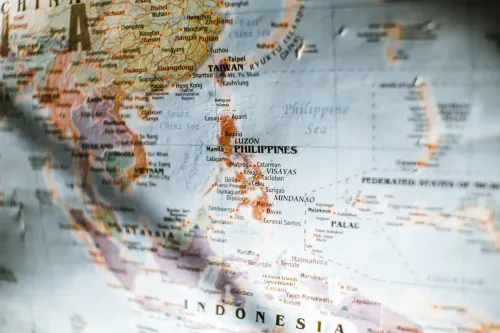
Philippines Geography for Learners: Islands & Language
Philippines geography for Tagalog learners: 7,641 islands, three island groups, and the Southern Luzon heartland where the Tagalog language was born.

Days of the Week and Months in Tagalog
The days of the week and months in Tagalog are Spanish loanwords. Learn all 7 days and 12 months with pronunciation, plus how to say dates and 'every Monday.'

Ang, Ng, Sa: The 3 Tagalog Case Markers Explained
Ang, ng, sa are the three Tagalog case markers every noun takes. Learn what each does, the personal forms si/ni/kay, plurals with mga, and clear examples.