From root: kulo
Conjugations
Past (Completed)
ipinakulo
i-pi-na-ku-LO
had something boiled
Present (Incomplete)
ipinapakulo
i-pi-na-pa-ku-LO
having something boiled
Future (Contemplated)
ipapakulo
i-pa-pa-ku-LO
will have something boiled
Usage Note
Ipakulo is used when instructing someone to boil an ingredient, such as water or meat, as a preparatory step in many Filipino recipes. It focuses on the object being boiled and is frequently heard in kitchen settings or daily chores.
Examples
" Ipakulo mo ang tubig. "
Natural Translation
Have the water boiled.
Literal Translation
Have-boil you the water.
" Gusto kong ipakulo ang sabaw. "
Natural Translation
I want to have the soup boiled.
Literal Translation
Want I have-boil the soup.
" Bago mo ihalo ang gulay, ipakulo mo muna ang sabaw nang mga sampung minuto para lumasa. "
Natural Translation
Before you mix in the vegetables, have the broth boiled first for about ten minutes so it gains flavor.
Literal Translation
Before you mix the vegetable, have-boil you first the broth for about ten minute to gain-flavor.
Take Tagalog with you
The full course, a 12,500-word dictionary, and flashcards that make every word stick — free to start on iOS and Android.




Tagalog builds thousands of words from a few hundred roots.
How Tagalog words workWord family
kulo has 6 related forms built from the same root.
Related Words
Explore Tagalog by topic
Free guides on grammar, vocabulary, and culture to take you past single-word lookups.
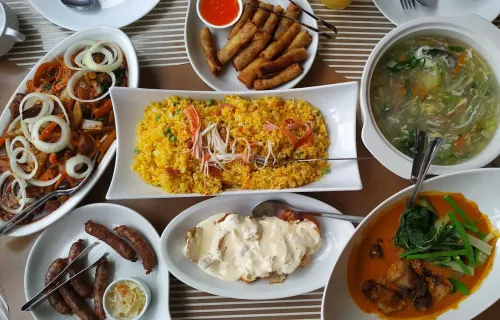
Filipino Food: 12 Essential Dishes (With Tagalog Names)
Filipino food, from adobo to halo-halo: learn the Tagalog names, pronunciations, and ingredients behind 12 dishes you'll want to try on your first trip.

Tagalog Word Order: Sentence Structure Made Simple
Why Tagalog puts the verb first, and how ang, ng, and sa markers work. A clear guide to VSO word order, forming questions, and negation.

Tagalog Verb Focus System Explained (It's Not Active vs. Passive)
The Tagalog verb focus system isn't active vs. passive. Learn actor focus, object focus, and more with clear examples that finally make it click.

Mano Po and Filipino Etiquette: A Visitor's Guide
Mano po presses an elder's hand to your forehead as a blessing. Learn who to mano, how to lip-point, and the etiquette that wins over a Filipino family.