kumpare
kumpáre with stress marks
male godparent; male sponsor; close male friend (variant spelling)
Usage Note
Kumpare is the more colloquial variant of kumpadre, both from Spanish compadre and both used as a warm form of address between close male friends or co-parents in the Catholic godparent relationship. The compadrazgo bond it signals carries real social weight in Filipino communities — mutual obligations of loyalty and reciprocal support.
Examples
" Kumusta, kumpare? "
Natural Translation
How are you, friend?
Literal Translation
How, male-friend?
" Plano kong gawing kumpare ang aking matalik na kaibigan sa kasal. "
Natural Translation
I plan to make my best friend a godfather at the wedding.
Literal Translation
Plan I to make male godparent the my best friend at wedding.
" Tinawagan ako ng aking kumpare para hingin ang tulong ko sa darating na binyag ng anak niya. "
Natural Translation
My compadre called me to ask for my help with the upcoming baptism of his child.
Literal Translation
Called me by my male-godparent to ask the help my at coming baptism of child his.
Take Tagalog with you
The full course, a 12,500-word dictionary, and flashcards that make every word stick — free to start on iOS and Android.




Tagalog builds thousands of words from a few hundred roots.
How Tagalog words workRelated Words
Explore Tagalog by topic
Free guides on grammar, vocabulary, and culture to take you past single-word lookups.

How to Say "I Love You" in Tagalog: Phrases & Meaning
Learn how to say I love you in Tagalog. Mahal kita, Iniibig kita, and Filipino terms of endearment for partners, family, and friends — with cultural notes.
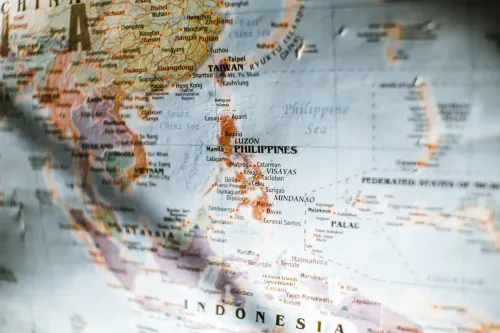
Philippines Geography for Learners: Islands & Language
Philippines geography for Tagalog learners: 7,641 islands, three island groups, and the Southern Luzon heartland where the Tagalog language was born.

Mano Po and Filipino Etiquette: A Visitor's Guide
Mano po presses an elder's hand to your forehead as a blessing. Learn who to mano, how to lip-point, and the etiquette that wins over a Filipino family.
Days of the Week and Months in Tagalog
The days of the week and months in Tagalog are Spanish loanwords. Learn all 7 days and 12 months with pronunciation, plus how to say dates and 'every Monday.'