From root: kurot
Conjugations
Past (Completed)
kumurot
ku-mu-ROT
pinched
Present (Incomplete)
kumukurot
ku-mu-ku-ROT
is pinching
Future (Contemplated)
kukurot
ku-ku-ROT
will pinch
Usage Note
Kumurot is used when an actor pinches someone or takes a small portion of something like food. It can refer to a physical gesture of affection or discipline, as well as the act of breaking off a small piece of bread or snack to eat.
Examples
" Kumurot ng tinapay si Ana. "
Natural Translation
Ana pinched off a piece of bread.
Literal Translation
Pinched of bread Ana.
" Huwag mong subukang kumurot ng bata. "
Natural Translation
Don't try to pinch a child.
Literal Translation
Don't you try-of pinch of child.
" Bago pa man matikman ng bisita ang pagkain, kumurot na siya ng kaunti para subukan kung masarap. "
Natural Translation
Even before the guest tasted the food, she pinched off a little to check if it was good.
Literal Translation
Before even taste of guest the food, pinched already she of little to try if delicious.
Take Tagalog with you
The full course, a 12,500-word dictionary, and flashcards that make every word stick — free to start on iOS and Android.




Tagalog builds thousands of words from a few hundred roots.
How Tagalog words workWord family
kurot has 6 related forms built from the same root.
Related Words
Explore Tagalog by topic
Free guides on grammar, vocabulary, and culture to take you past single-word lookups.

Na vs -ng in Tagalog: The Linker Rule Made Simple
When do you use na vs -ng in Tagalog? One simple rule, with clear examples, memory tips, and common mistakes explained for English-speaking beginners.

Ang, Ng, Sa: The 3 Tagalog Case Markers Explained
Ang, ng, sa are the three Tagalog case markers every noun takes. Learn what each does, the personal forms si/ni/kay, plurals with mga, and clear examples.
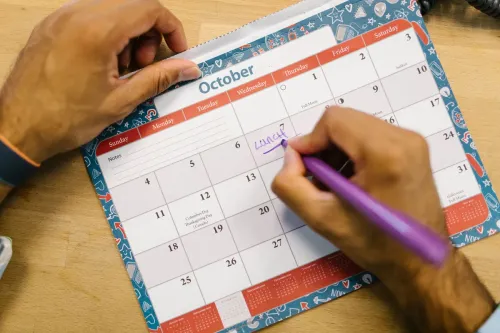
Days of the Week and Months in Tagalog
The days of the week and months in Tagalog are Spanish loanwords. Learn all 7 days and 12 months with pronunciation, plus how to say dates and 'every Monday.'

Tagalog Pronouns Explained: Complete Chart with Examples
Every Tagalog pronoun explained with clear charts: ang/ng/sa forms, tayo vs kami, ikaw vs ka, politeness markers, and the mistakes beginners make.