lahi
lahì with stress marks
race or lineage
Usage Note
Lahi refers to a person's race, ancestry, or ethnic background, often used when discussing heritage and national identity. In daily life, it is also the standard term for animal breeds and can describe a family's shared traits or lineage.
Examples
" Iba ang lahi ng aso. "
Natural Translation
The dog's breed is different.
Literal Translation
Different the breed of dog.
" Iba't ibang lahi ang nakatira rito. "
Natural Translation
Different races live here.
Literal Translation
Different race the living here.
" Mahalagang matutunan ng mga bata na igalang ang bawat tao anuman ang kulay o lahi niya. "
Natural Translation
It's important for children to learn to respect every person regardless of their color or race.
Literal Translation
Important to-be-learned by the children that respect the every person whatever the color or race his/her.
Take Tagalog with you
The full course, a 12,500-word dictionary, and flashcards that make every word stick — free to start on iOS and Android.




Tagalog builds thousands of words from a few hundred roots.
How Tagalog words workDerived Words
Actor Focus Verbs
Related Words
- AWOL absence without leave
- Amboy short for American boy
- Ati ethnolinguistic group in Panay
- Balbalan ethnolinguistic group (Kalinga)
- Hiligaynon ethnolinguistic group/language
- Ilokana female native of the Ilocos region; Ilokana woman
- Ilokano Ethnolinguistic group in Ilocos
- Ilonggo Language/People of Western Visayas
Explore Tagalog by topic
Free guides on grammar, vocabulary, and culture to take you past single-word lookups.

Seasons in the Philippines: A Tagalog Guide
The Philippines has two seasons, not four. Learn tag-araw, tag-ulan, and taglamig, the generative tag- prefix, and the weather vocabulary to match.

Tagalog Verb Focus System Explained (It's Not Active vs. Passive)
The Tagalog verb focus system isn't active vs. passive. Learn actor focus, object focus, and more with clear examples that finally make it click.
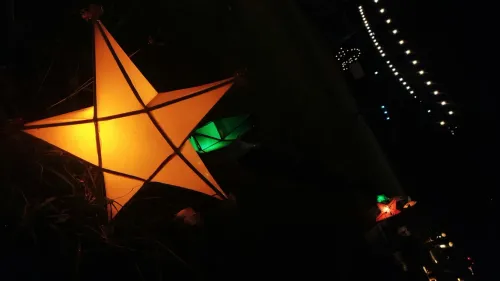
Philippine Christmas Traditions: World's Longest Holiday
Philippine Christmas traditions run four months — from Ber-month carols to Simbang Gabi dawn masses, Noche Buena feasts, and parol lanterns lighting every street.
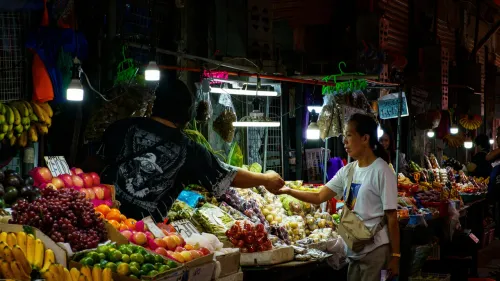
Tagalog Numbers 1-100: Counting, Time & Money Explained
Learn Tagalog numbers 1-100 and beyond. Master both native and Spanish-derived counting systems, plus telling time, reading prices, and ordinals.