lakan
lakán with stress marks
title of nobility (pre-Hispanic)
Usage Note
Lakan was a pre-colonial Philippine title for a male member of the datu (noble) class, equivalent to a lord or prince. It is now primarily a historical and literary term, appearing in scholarly texts, historical novels, and cultural reenactments of pre-Hispanic Filipino society.
Examples
" Pinuri ng bayan ang lakan. "
Natural Translation
The town praised the noble.
Literal Translation
Praised by-the town the noble.
" Matapang ang lakan. "
Natural Translation
The noble is brave.
Literal Translation
Brave the noble.
" Bago dumating ang mga Espanyol, isang makapangyarihang lakan ang namuno sa malawak na pamayanan sa tabi ng ilog. "
Natural Translation
Before the Spaniards arrived, a powerful noble led the vast settlement beside the river.
Literal Translation
Before arrived the [mga] Spaniard, one powerful [na] noble led in-the vast [na] community at side of-the river.
Take Tagalog with you
The full course, a 12,500-word dictionary, and flashcards that make every word stick — free to start on iOS and Android.




Tagalog builds thousands of words from a few hundred roots.
How Tagalog words workRelated Words
Explore Tagalog by topic
Free guides on grammar, vocabulary, and culture to take you past single-word lookups.
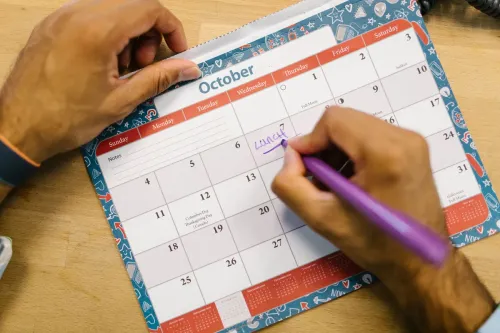
Days of the Week and Months in Tagalog
The days of the week and months in Tagalog are Spanish loanwords. Learn all 7 days and 12 months with pronunciation, plus how to say dates and 'every Monday.'

Philippine Christmas Traditions: World's Longest Holiday
Philippine Christmas traditions run four months — from Ber-month carols to Simbang Gabi dawn masses, Noche Buena feasts, and parol lanterns lighting every street.

Tagalog Verb Focus System Explained (It's Not Active vs. Passive)
The Tagalog verb focus system isn't active vs. passive. Learn actor focus, object focus, and more with clear examples that finally make it click.

Tagalog Numbers 1-100: Counting, Time & Money Explained
Learn Tagalog numbers 1-100 and beyond. Master both native and Spanish-derived counting systems, plus telling time, reading prices, and ordinals.