makalawa
makalawâ with stress marks
twice; day after tomorrow
From root: lawa
Usage Note
Makalawa has two distinct uses: as a temporal adverb meaning 'the day after tomorrow' (two days from now), and as a quantifier meaning 'twice' or 'two times over'. Both uses derive from the root 'dalawa' (two) with the prefix 'maka-' indicating a count of times or intervals. Context determines which sense is intended.
Examples
" Babalik ako makalawa. "
Natural Translation
I will return the day after tomorrow.
Literal Translation
Return I day-after-tomorrow.
" Aalis kami makalawa. "
Natural Translation
We will leave the day after tomorrow.
Literal Translation
Leave we day after tomorrow.
" Kung hindi natin matatapos ngayon ang proyekto, ipagpatuloy na lang natin ito makalawa pagkatapos ng pista. "
Natural Translation
If we can't finish the project today, let's just continue it the day after tomorrow, after the fiesta.
Literal Translation
If not we can-finish today the project, continue just we it day-after-tomorrow after of-the fiesta.
Take Tagalog with you
The full course, a 12,500-word dictionary, and flashcards that make every word stick — free to start on iOS and Android.




Tagalog builds thousands of words from a few hundred roots.
How Tagalog words workWord family
lawa has 5 related forms built from the same root.
Related Words
Explore Tagalog by topic
Free guides on grammar, vocabulary, and culture to take you past single-word lookups.

Philippine Christmas Traditions: World's Longest Holiday
Philippine Christmas traditions run four months — from Ber-month carols to Simbang Gabi dawn masses, Noche Buena feasts, and parol lanterns lighting every street.

Tagalog Numbers 1-100: Counting, Time & Money Explained
Learn Tagalog numbers 1-100 and beyond. Master both native and Spanish-derived counting systems, plus telling time, reading prices, and ordinals.

Tagalog Root Words: Learn a Few Hundred, Understand Thousands
Tagalog root words unlock vocabulary fast: learn a few hundred and recognize thousands. Real word families, examples, and a practical study strategy.
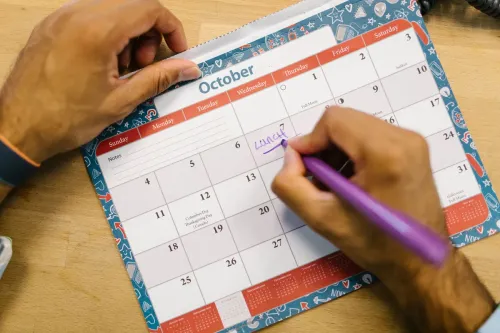
Days of the Week and Months in Tagalog
The days of the week and months in Tagalog are Spanish loanwords. Learn all 7 days and 12 months with pronunciation, plus how to say dates and 'every Monday.'