Usage Note
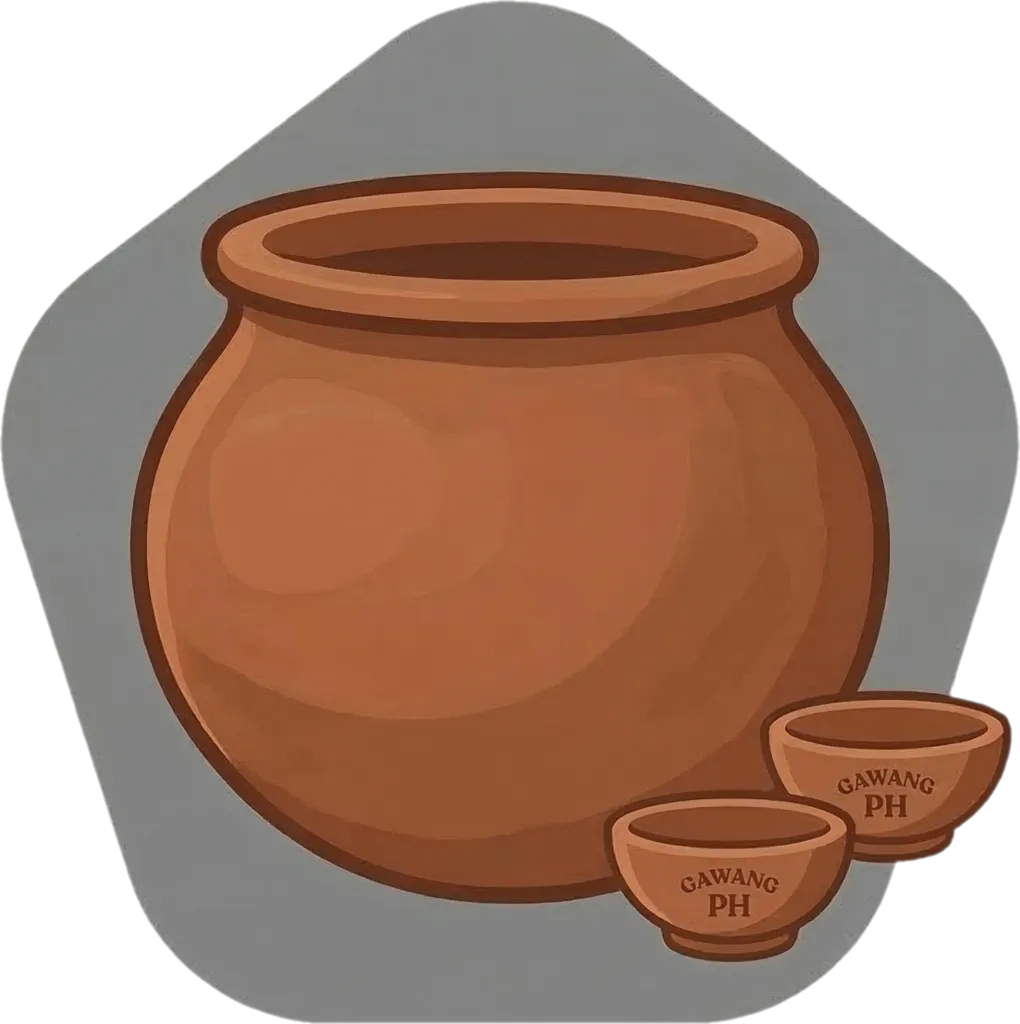
Luwad is the specific term for the sticky clay soil used for making pottery and traditional Filipino cookware like the 'palayok'. It is most commonly discussed in the context of traditional crafts or when describing specific moldable soil types found in rural areas.
Examples
" Gumawa ang bata ng aso mula sa luwad. "
Natural Translation
The child made a dog out of clay.
Literal Translation
Made the child of dog from clay.
" Ginamit namin ang luwad sa paggawa ng banga. "
Natural Translation
We used clay to make a jar.
Literal Translation
Used we the clay in making of jar.
" Sa nayon, hinuhulma pa rin ng mga manggagawa ang luwad sa pamamagitan ng kamay bago ito ilagay sa mainit na pugon. "
Natural Translation
In the village, the workers still mold the clay by hand before placing it in the hot kiln.
Literal Translation
In village, mold still of the workers the clay through of hand before this put in hot kiln.
Take Tagalog with you
The full course, a 12,500-word dictionary, and flashcards that make every word stick — free to start on iOS and Android.




Tagalog builds thousands of words from a few hundred roots.
How Tagalog words workDerived Words
Actor Focus Verbs
Related Words
Explore Tagalog by topic
Free guides on grammar, vocabulary, and culture to take you past single-word lookups.

Tagalog Affixes Explained: A Beginner's Guide to Word Building
Tagalog affixes turn one root word into dozens of meanings. Learn prefixes, infixes, suffixes, and circumfixes with clear examples for beginners.

Ng vs Nang in Tagalog: The Spelling Rule
Ng vs nang sound identical but spell differently. Use ng to mark nouns (of, the object), and nang for how, when, repetition, and counting time.

Is Tagalog Hard to Learn? An Honest Answer
Tagalog takes around 1,100 hours to reach professional proficiency. Here is what is easy, what is hard, and what to expect at 3, 6, and 12 months.

Tagalog Verb Focus System Explained (It's Not Active vs. Passive)
The Tagalog verb focus system isn't active vs. passive. Learn actor focus, object focus, and more with clear examples that finally make it click.