From root: manang
Conjugations
Past (Completed)
nagmanang
nag-ma-NANG
addressed as manang
Present (Incomplete)
nagmamanang
nag-ma-ma-NANG
addressing as manang
Future (Contemplated)
magmamanang
mag-ma-ma-NANG
will address as manang
Usage Note
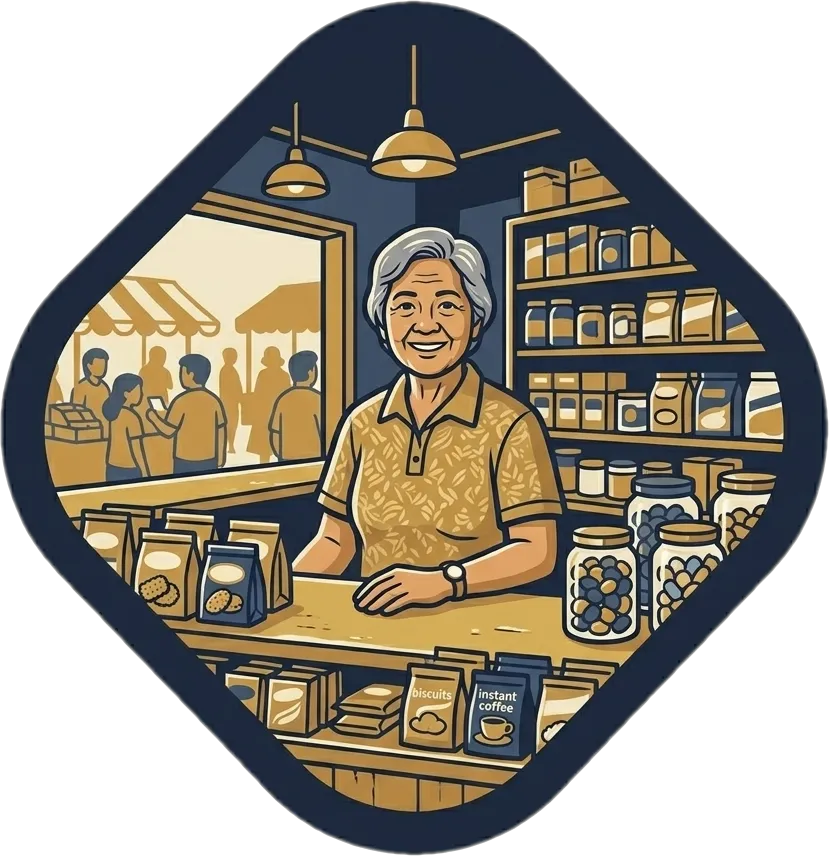
Magmanang is used when addressing an older sister or a respected elder woman as a sign of respect. While similar to 'ate', it is more common in regional contexts or when referring to women perceived as traditional or devout.
Examples
" Magmanang ka sa kanya. "
Natural Translation
Address her as manang.
Literal Translation
Address-as-manang you to her.
" Kailangan mong magmanang sa kanya. "
Natural Translation
You need to address her as manang.
Literal Translation
Need you address-as-manang to her.
" Tinuruan kami ng aming magulang na magmanang sa mga nakatatandang babae sa baryo bilang tanda ng paggalang. "
Natural Translation
Our parents taught us to address the older women in the village as manang as a sign of respect.
Literal Translation
Taught us by our parent that address-as-manang to plural older woman at village as sign of respect.
Take Tagalog with you
The full course, a 12,500-word dictionary, and flashcards that make every word stick — free to start on iOS and Android.




Tagalog builds thousands of words from a few hundred roots.
How Tagalog words workWord family
manang has 2 related forms built from the same root.
Related Words
Explore Tagalog by topic
Free guides on grammar, vocabulary, and culture to take you past single-word lookups.

Tagalog Pronouns Explained: Complete Chart with Examples
Every Tagalog pronoun explained with clear charts: ang/ng/sa forms, tayo vs kami, ikaw vs ka, politeness markers, and the mistakes beginners make.

Tagalog Word Order: Sentence Structure Made Simple
Why Tagalog puts the verb first, and how ang, ng, and sa markers work. A clear guide to VSO word order, forming questions, and negation.
Filipino Food: 12 Essential Dishes (With Tagalog Names)
Filipino food, from adobo to halo-halo: learn the Tagalog names, pronunciations, and ingredients behind 12 dishes you'll want to try on your first trip.

Philippines Geography for Learners: Islands & Language
Philippines geography for Tagalog learners: 7,641 islands, three island groups, and the Southern Luzon heartland where the Tagalog language was born.