negatibo
negatíbo with stress marks
negative; expressing denial
Usage Note
Negatibo is borrowed from Spanish negativo and is used across multiple domains: medicine, photography, grammar, and informally to describe a pessimistic attitude. The word is understood and used across all age groups and registers in the Philippines.
Examples
" Negatibo ang resulta. "
Natural Translation
The result is negative.
Literal Translation
Negative the result.
" Huwag mong hayaan na makaapekto sa iyo ang mga negatibo na komento ng iba. "
Natural Translation
Don't let the negative comments of others affect you.
Literal Translation
Don't you let that affect to you the plural negative that comment of others.
" Negatibo ang isip mo kaya parati kang nababalisa, subukan mo namang tumingin sa mas magandang panig. "
Natural Translation
Your thinking is negative, that's why you're always anxious; try to look at the brighter side instead.
Literal Translation
Negative the mind your so always you-LINK anxious, try you however-LINK looking at-the more good-LINK side.
Take Tagalog with you
The full course, a 12,500-word dictionary, and flashcards that make every word stick — free to start on iOS and Android.




Tagalog builds thousands of words from a few hundred roots.
How Tagalog words workRelated Words
Explore Tagalog by topic
Free guides on grammar, vocabulary, and culture to take you past single-word lookups.

Tagalog Time Expressions: Past, Present & Future Guide
Tagalog has no tenses — it uses aspect. Learn time words, days of the week, clock time, and the aspect system, with vocabulary tables and cultural notes.
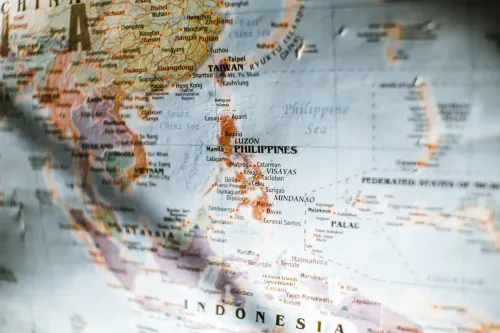
Philippines Geography for Learners: Islands & Language
Philippines geography for Tagalog learners: 7,641 islands, three island groups, and the Southern Luzon heartland where the Tagalog language was born.

Mano Po and Filipino Etiquette: A Visitor's Guide
Mano po presses an elder's hand to your forehead as a blessing. Learn who to mano, how to lip-point, and the etiquette that wins over a Filipino family.
Spaced Repetition for Tagalog: How Flashcards Make Words Stick
Cramming Tagalog vocabulary fails. See how spaced repetition — the science behind smart flashcards — makes words stick for the long term.