opiser
opíser with stress marks
officer; official
Usage Note
Opiser is borrowed from English 'officer' and is used to refer to military or police officers, or an officer within an organization. The more formal Spanish-derived opisyal is sometimes preferred in writing and official documents.
Examples
" Tumawag kami sa opiser. "
Natural Translation
We called the officer.
Literal Translation
Called we to officer.
" Isang matapang na opiser ang namuno sa grupo. "
Natural Translation
A brave officer led the group.
Literal Translation
One brave officer the led in group.
" Ang opiser na nakatalaga sa aming lugar ay laging handang tumulong tuwing may emerhensiya sa kalsada. "
Natural Translation
The officer assigned to our area is always ready to help whenever there is an emergency on the road.
Literal Translation
The officer that assigned in our place is always ready to-help whenever has emergency on road.
Take Tagalog with you
The full course, a 12,500-word dictionary, and flashcards that make every word stick — free to start on iOS and Android.




Tagalog builds thousands of words from a few hundred roots.
How Tagalog words workRelated Words
Explore Tagalog by topic
Free guides on grammar, vocabulary, and culture to take you past single-word lookups.
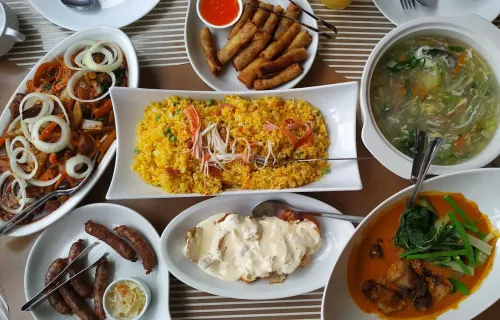
Filipino Food: 12 Essential Dishes (With Tagalog Names)
Filipino food, from adobo to halo-halo: learn the Tagalog names, pronunciations, and ingredients behind 12 dishes you'll want to try on your first trip.

Is Tagalog Hard to Learn? An Honest Answer
Tagalog takes around 1,100 hours to reach professional proficiency. Here is what is easy, what is hard, and what to expect at 3, 6, and 12 months.

Filipino Family Words and Honorifics: Ate, Kuya & Tita
Filipino family words like ate, kuya, tita, tito, lolo, and lola go far beyond family — learn how Filipinos use them with strangers, plus mano po etiquette.

How Long Does It Take to Learn Tagalog?
Survival Tagalog takes ~3-4 weeks and comfortable conversation 6-12 months. FSI's 1,100 hours is the professional bar, not the talking-to-family bar.