
From root: pakwan
Conjugations
Past (Completed)
nagpakwan
nag-pak-WAN
ate watermelon
Present (Incomplete)
nagpapakwan
nag-pa-pak-WAN
eating watermelon
Future (Contemplated)
magpapakwan
mag-pa-pak-WAN
will eat watermelon
Usage Note
Magpakwan is used in casual conversations to denote the act of eating or serving watermelon, particularly during hot days or family gatherings. This follows a common Filipino linguistic pattern where the 'mag-' prefix is attached to a fruit name to indicate consumption or sharing of that specific fruit.
Examples
" Magpakwan tayo sa labas. "
Natural Translation
Let's eat watermelon outside.
Literal Translation
Eat-watermelon we at outside.
" Masarap magpakwan kapag mainit. "
Natural Translation
It is delicious to eat watermelon when it is hot.
Literal Translation
Delicious to-eat-watermelon when hot.
" Pagkatapos ng mahabang biyahe sa init ng tag-araw, walang mas sasarap pa kaysa magpakwan sa lilim ng puno. "
Natural Translation
After a long trip in the summer heat, nothing is more delicious than eating watermelon in the shade of a tree.
Literal Translation
After of long trip in heat of summer, nothing more will-be-delicious than to-eat-watermelon in shade of tree.
Take Tagalog with you
The full course, a 12,500-word dictionary, and flashcards that make every word stick — free to start on iOS and Android.




Tagalog builds thousands of words from a few hundred roots.
How Tagalog words workWord family
pakwan has 1 related form built from the same root.
Related Words
Explore Tagalog by topic
Free guides on grammar, vocabulary, and culture to take you past single-word lookups.

Tagalog Root Words: Learn a Few Hundred, Understand Thousands
Tagalog root words unlock vocabulary fast: learn a few hundred and recognize thousands. Real word families, examples, and a practical study strategy.

How Long Does It Take to Learn Tagalog?
Survival Tagalog takes ~3-4 weeks and comfortable conversation 6-12 months. FSI's 1,100 hours is the professional bar, not the talking-to-family bar.
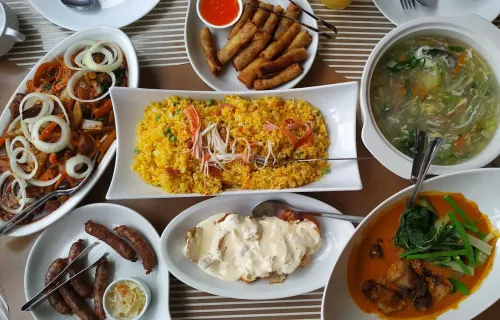
Filipino Food: 12 Essential Dishes (With Tagalog Names)
Filipino food, from adobo to halo-halo: learn the Tagalog names, pronunciations, and ingredients behind 12 dishes you'll want to try on your first trip.

Tagalog Word Order: Sentence Structure Made Simple
Why Tagalog puts the verb first, and how ang, ng, and sa markers work. A clear guide to VSO word order, forming questions, and negation.