From root: pansin
Conjugations
Past (Completed)
pinansin
pi-NAN-sin
noticed
Present (Incomplete)
pinapansin
pi-na-PAN-sin
is noticing
Future (Contemplated)
papansinin
pa-pan-si-NIN
will notice
Usage Note
Pansinin is an object-focus verb used when someone or something is the target of attention or acknowledgement. It is frequently used in social contexts, such as asking for attention or advising someone to ignore a person or situation ('Huwag pansinin').
Examples
" Huwag mong pansinin iyon. "
Natural Translation
Don't pay attention to that.
Literal Translation
Don't you notice that.
" Kailangan mong pansinin ang guro. "
Natural Translation
You need to notice the teacher.
Literal Translation
Need you notice the teacher.
" Kung gusto mong umunlad, kailangan mong pansinin ang maliliit na detalye na karaniwang hindi napapansin ng iba. "
Natural Translation
If you want to improve, you have to notice the small details that others usually overlook.
Literal Translation
If want you progress, need you notice the small plural detail that usually not noticed by others.
Take Tagalog with you
The full course, a 12,500-word dictionary, and flashcards that make every word stick — free to start on iOS and Android.




Tagalog builds thousands of words from a few hundred roots.
How Tagalog words workWord family
pansin has 5 related forms built from the same root.
Related Words
Explore Tagalog by topic
Free guides on grammar, vocabulary, and culture to take you past single-word lookups.

Languages of the Philippines: Tagalog, Cebuano, and More
Languages of the Philippines: one national language (Filipino) plus 180+ regional languages. Here's who speaks what, where, and why it matters to you.
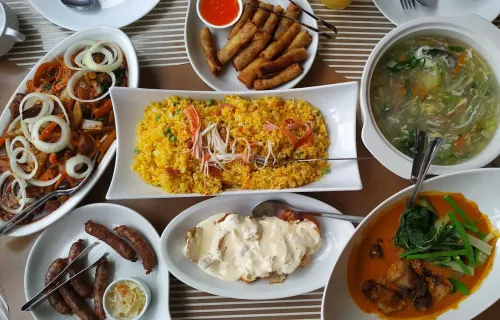
Filipino Food: 12 Essential Dishes (With Tagalog Names)
Filipino food, from adobo to halo-halo: learn the Tagalog names, pronunciations, and ingredients behind 12 dishes you'll want to try on your first trip.

Tagalog Pronouns Explained: Complete Chart with Examples
Every Tagalog pronoun explained with clear charts: ang/ng/sa forms, tayo vs kami, ikaw vs ka, politeness markers, and the mistakes beginners make.

Philippine Christmas Traditions: World's Longest Holiday
Philippine Christmas traditions run four months — from Ber-month carols to Simbang Gabi dawn masses, Noche Buena feasts, and parol lanterns lighting every street.